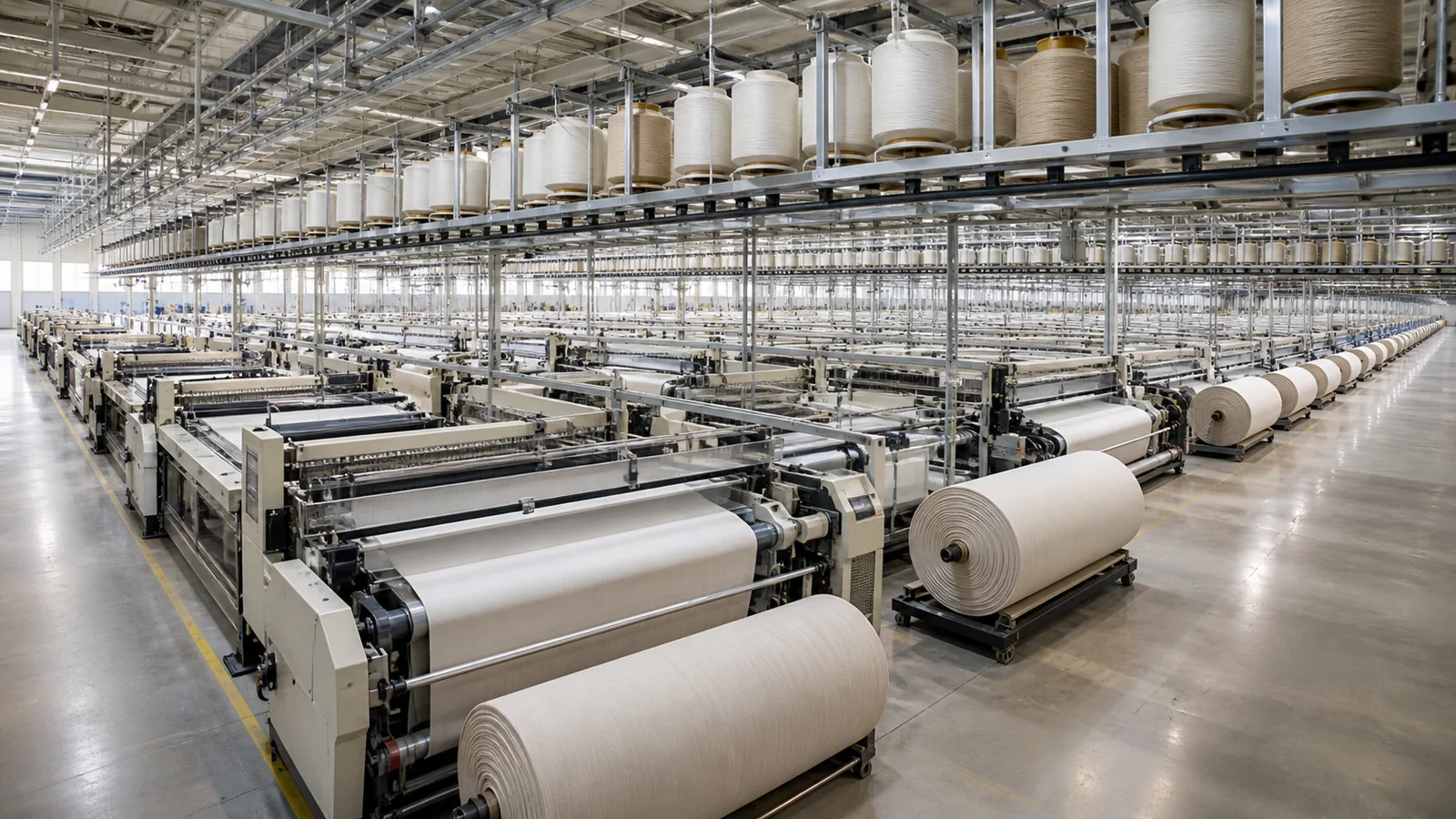
Turkey’s textile industry includes fiber and yarn operations, knitting, weaving, dyeing, finishing, home textiles, garment production, accessories, machinery, logistics, and export services. For buyers, its practical value comes from the combination of textile capability and apparel manufacturing—not from a claim that every supplier offers the same product, scale, or standard.
Reading Turkey’s export data correctly
Current industry figures should be read with their year and category definition. ITHIB’s 2025–2026 industry evaluation reported approximately US$11.4 billion in 2025 textile and raw-material exports and approximately US$26 billion for textiles and apparel together. IHKIB’s TİM-based annual apparel report recorded US$16.773 billion in 2025 apparel exports under its own category series, down from US$17.920 billion in 2024.
These figures serve different reporting frames. They should not be added or mixed without checking classification coverage, and they should not be described as timeless “current” statistics after the reporting year. The IHKIB series recorded the European Union as 59.6% of 2025 apparel exports, while ITHIB described the EU share of Turkish textile exports at roughly 40%.
Category definitions matter
“Textiles,” “textile and raw materials,” “apparel,” and “textiles plus apparel” are not interchangeable. Preserve the source’s category name, reporting year, and currency when comparing market figures.
How the sourcing ecosystem works
Coordination and development
The city connects manufacturers, fabric and trim suppliers, sampling rooms, print and embroidery services, showrooms, logistics, and international business access.
Industrial textile base
Bursa and other Marmara centers are associated with significant textile capacity, including weaving, dyeing, finishing, yarn, and specialized production networks.
Materials and apparel
İzmir and the wider Aegean region connect cotton, textile, apparel, export, and logistics activity, with supplier strength varying by category.
Specialization beyond one city
Denizli is well known for home textiles, while Gaziantep, Kahramanmaraş, and other centers support yarn, nonwoven, carpet, textile, and industrial production.
Regional labels are useful for research, but not proof that a specific factory has the required equipment or experience. Verify the actual production site, subcontracting route, machinery, capacity, quality system, and export record.
Why international buyers consider Turkey
For European and nearby markets, geography can support visits, road transport, and shorter replenishment routes than distant production bases. The connected textile and garment ecosystem can also help brands coordinate fabric, sampling, sewing, decoration, labels, packing, and export preparation.
Those advantages are conditional. Turkey is not automatically the lowest-cost option, and proximity does not guarantee a short lead time. Custom fabric, dyeing, trims, sampling revisions, laboratory testing, production loading, and approvals still define the schedule. Currency movement and quoted-price validity should be managed explicitly.
Buyer due diligence should examine product specialization, sample quality, capacity, subcontracting, social and technical audits where required, material traceability, quality-control responsibility, commercial terms, and logistics. Visit the actual production location where the risk justifies it.
Turkey textile and sourcing guides
See Textile Production for the mill sequence and Garment Manufacturing for apparel development.
2025 data sources: ITHIB’s 2025–2026 industry evaluation and the IHKIB 2025 annual apparel export report.