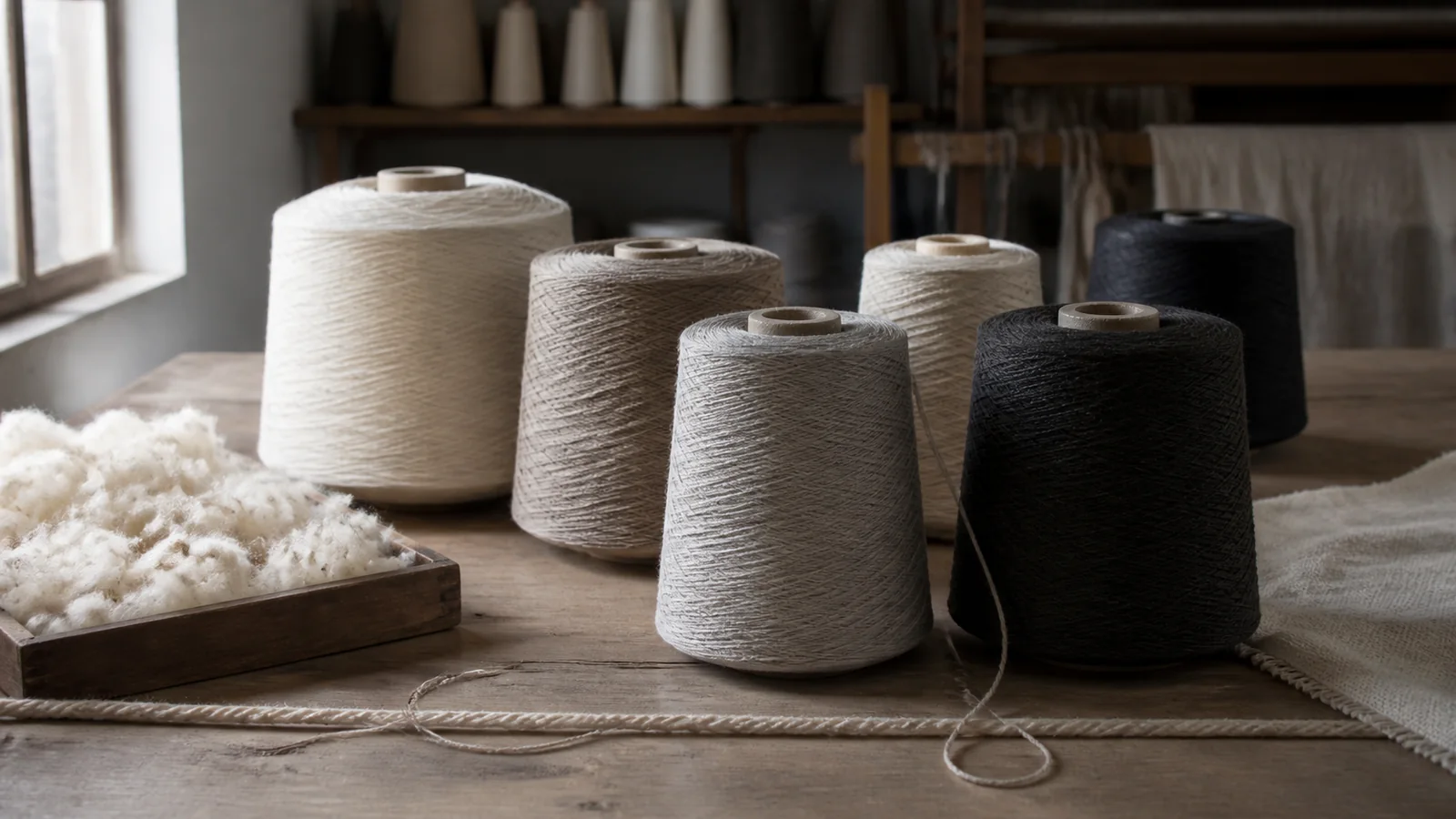
A textile fiber is the basic material from which yarns and fabrics are made. Yarn is a continuous strand of fibers or filaments prepared for knitting, weaving, sewing, or other textile processes. Fiber identity matters, but yarn structure determines how those fibers are presented in the fabric.
Fiber categories and identity
Textile fibers are commonly discussed as natural or manufactured. Cotton, wool, linen, and silk come from plant or animal sources. Manufactured fibers include regenerated cellulosics and synthetics such as polyester, polyamide, and elastane. Those categories are useful starting points, but sourcing decisions need more detail: exact generic fiber names, percentages, traceability claims, processing history, and intended use.
Source and variability
Natural fibers can vary with origin, variety, staple properties, preparation, and processing. The generic name alone does not define yarn quality or fabric performance.
Process and producer matter
Viscose, modal, and lyocell are manufactured from cellulosic feedstocks through different production routes. Brand names and generic fiber names should not be treated as interchangeable.
Engineered performance
Polyester, polyamide, and elastane may add strength, recovery, abrasion performance, stretch, or drying characteristics depending on yarn and fabric design.
One fabric, several trade-offs
Blending can balance hand feel, strength, stability, recovery, cost, dyeing behavior, and care—but the result must be assessed as a complete textile system.
From fiber to yarn
Staple-fiber spinning generally prepares and aligns fibers before drawing and twisting them into yarn. Different systems produce different structures. Ring spinning continuously drafts and twists the strand; rotor or open-end spinning forms yarn through a different mechanism and production route. One label is not automatically suitable for every product.
For a clean single-jersey T-shirt, yarn evenness, hairiness, twist, and contamination control can affect surface appearance and printing. For a bulky sweat fabric, yarn selection on the face, loop, and binding systems may be different. A buyer therefore needs to connect yarn requirements to the fabric construction rather than ordering a spinning term in isolation.
Yarn count needs its system
A count number is incomplete without the count system. Indirect systems become finer as the number rises; direct systems become coarser as the number rises. Specify the system—such as Ne or tex—and whether the yarn is single or plied.
Yarn properties that affect fabric
- Count: relates mass and length and helps define yarn size within a stated system.
- Twist: holds staple fibers together and influences strength, liveliness, hand, and appearance.
- Ply: combines two or more yarns and can change balance, strength, texture, and cost.
- Evenness and imperfections: can show as bars, thin places, thick places, or inconsistent appearance.
- Hairiness: affects softness, lint, pilling tendency, surface clarity, and some decoration results.
- Filament or staple form: changes continuity, texture, luster, and processing behavior.
These variables interact with knitting or weaving settings and finishing. A better yarn cannot compensate for every construction or finishing problem, and an attractive finished swatch may hide variability that appears in bulk. Supplier documentation, representative samples, and agreed testing should work together.
What a buyer should confirm
- Use the correct generic fiber names and percentages in development records and labeling discussions.
- State yarn count with its system, plus single or ply construction.
- Confirm spinning or texturing route only where it affects the required result.
- Link yarn requirements to the fabric construction, color, finish, and intended garment.
- Request evidence for origin, recycled, organic, or branded-fiber claims rather than relying on a verbal description.
See the Fabrics hub for construction and performance, Textile Production for the wider mill sequence, and Sustainability & Certifications for claim verification. Existing guides on fabric selection and sourcing in Istanbul show how these inputs reach product development.
Technical background: CottonWorks yarn spinning, yarn numbering, and BISFA terminology booklets.