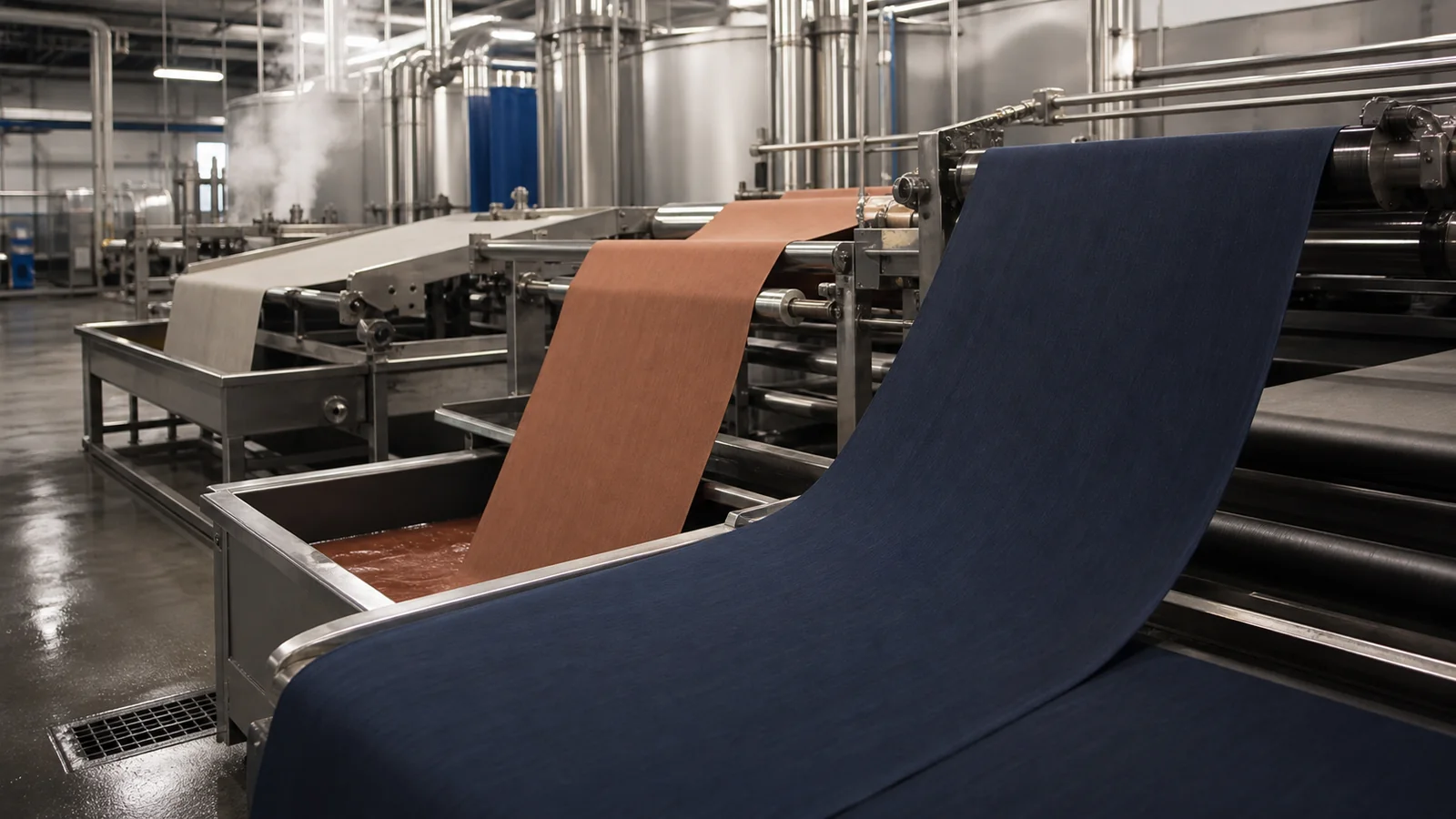
Textile dyeing introduces color to fiber, yarn, fabric, or garments. Finishing includes mechanical and chemical processes used to change appearance, hand, dimensions, or performance. These stages can transform the same base fabric into materially different products, so they must be specified and approved rather than treated as cosmetic extras.
Preparation comes before reliable color
Before dyeing, a textile may need desizing, scouring, bleaching, heat setting, or other preparation depending on its fiber and previous processing. Preparation removes or controls materials that interfere with wetting, dye uptake, and uniformity. A color recipe cannot correct every problem in an inconsistently prepared substrate.
Build a consistent substrate
Cleaning, bleaching, or stabilizing the textile helps create predictable absorbency and dimensions before coloration.
Choose where color enters
Stock, yarn, piece, and garment dyeing occur at different stages and create different planning, shade, MOQ, and inventory consequences.
Control hand and dimensions
Compacting, calendaring, brushing, raising, softening, and heat-setting can affect surface, width, shrinkage, stretch, and recovery.
Approve more than a shade
Colorfastness, shade continuity, dimensional change, skew, appearance, and restricted-substance requirements may all need confirmation.
Coloration routes change the production plan
Fiber or stock dyeing colors loose fiber before spinning. Yarn dyeing is used when differently colored yarns create stripes, checks, jacquards, or other constructed effects. Piece dyeing colors fabric after knitting or weaving and is common for solid-color fabrics. Garment dyeing colors sewn products and can produce a distinctive appearance, but seams, labels, trims, shade variation, and dimensional behavior must be considered from the start.
A lab dip is a small color development submitted for approval against a target. It is evidence of a recipe on a particular substrate under stated viewing conditions—not a guarantee that every bulk lot will look identical. Bulk approval should use defined tolerances, lighting, substrate, and lot controls.
Color depends on the whole system
The same nominal shade may look different on cotton and polyester, on smooth jersey and brushed fleece, or under different light sources. Approve color on the production substrate and evaluate metamerism where it matters.
Finishes change both touch and risk
Mechanical finishes use physical action. Brushing or raising develops a softer, lofted surface; calendaring changes surface smoothness or luster; compacting helps control dimensional change in knitted goods. Chemical finishes may add softness, water repellency, easy-care behavior, antimicrobial effects, or other properties, but performance and claim language need evidence.
Finishing can also create trade-offs. Brushing may add warmth and softness while affecting pilling or seam bulk. Softening can improve hand but influence absorbency, printing, or later bonding. Heat setting can stabilize some synthetic or blended structures but must be compatible with elastane and color. The correct route depends on the fiber, construction, garment, care cycle, and required claim.
Garment washing and dyeing occur after sewing. This can deliver a broken-in or vintage character, yet the bulk may show intentional or unintended variation. Buyers should define acceptable shade range, measurement tolerance after processing, and the approved visual standard.
Buyer controls from lab to bulk
- Identify fiber content, construction, previous treatments, and the end-use requirement.
- Agree the coloration or finish route before sampling, including trims and decoration compatibility.
- Approve lab dips, strike-offs, hand standards, and physical samples under controlled conditions.
- Specify the relevant tests and conditioning or laundering method before bulk production.
- Check shade continuity, dimensions, appearance, and performance on representative bulk lots.
Our guides to fabric shrinkage, sweat fabric constructions, and screen printing and embroidery explain related production risks. Continue to Quality & Testing or Sustainability & Certifications for verification and claim controls.
Technical background: the European Commission’s Textiles Industry BREF and CottonWorks guides to dyeing preparation and mechanical finishing.