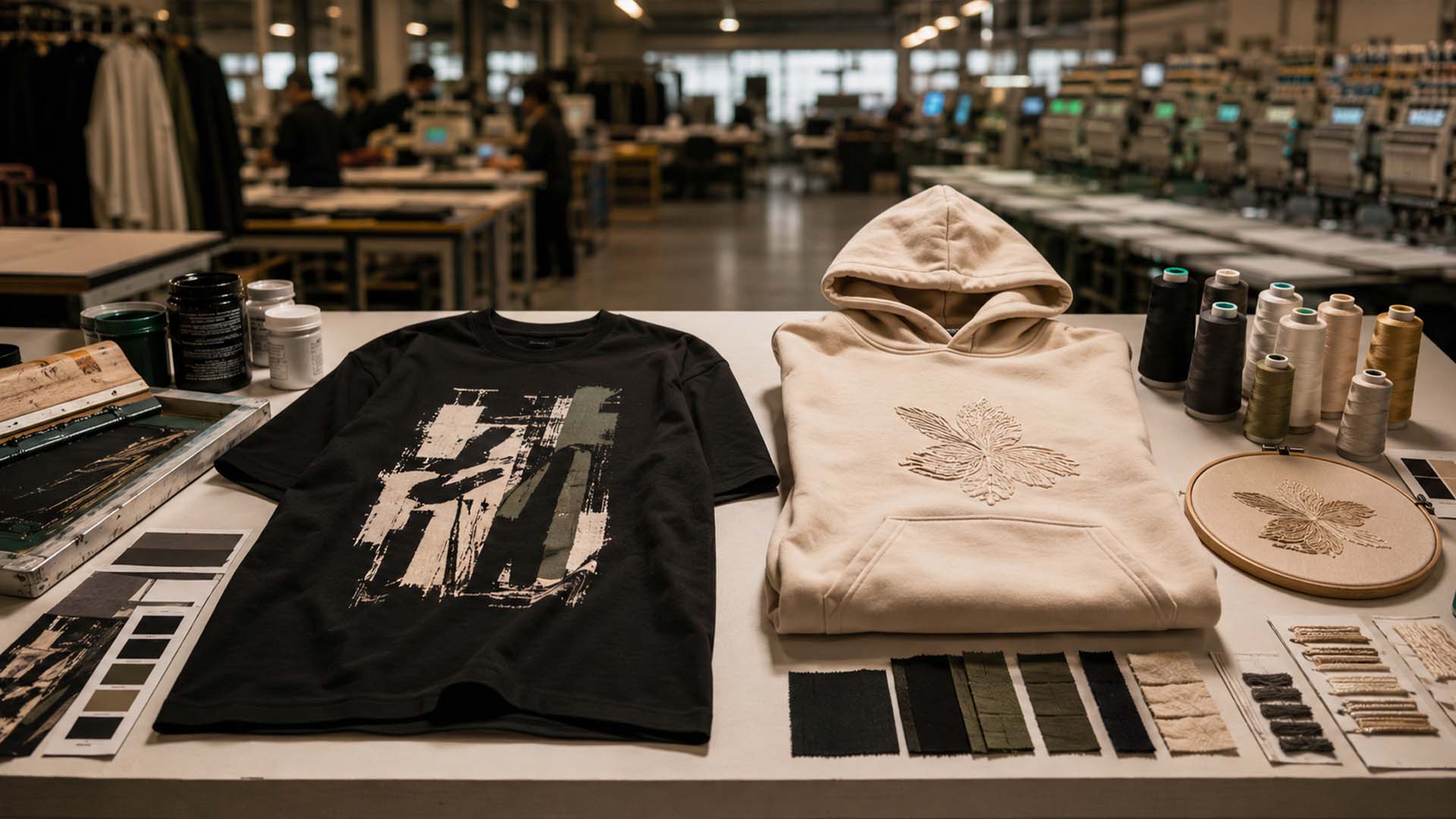
Is screen printing or embroidery better for streetwear?
Screen printing is usually the better choice for large graphics, bold color areas, and high-volume T-shirt production. Embroidery is stronger for small logos, premium texture, and durable branding on hoodies, sweatshirts, caps, and jackets. The right method depends on the artwork, fabric, garment weight, quantity, and the visual identity of the brand.
The screen printing vs embroidery streetwear decision affects far more than decoration. It changes the way a garment feels, how the artwork ages, how production costs are built, and how customers perceive the finished product. A wide back graphic and a compact chest logo may belong to the same collection, yet they require very different technical choices.
Strong streetwear development starts by matching the technique to the garment instead of forcing every design into one process. Fabric structure, placement, color count, artwork detail, and order quantity should all be reviewed before sampling.
Screen Printing vs Embroidery: Quick Comparison
| Factor | Screen Printing | Embroidery |
|---|---|---|
| Best visual use | Large graphics, typography, illustrations, bold color areas | Logos, badges, monograms, small premium details |
| Texture | Flat to slightly raised, depending on ink | Raised, tactile, and dimensional |
| Cost driver | Number of colors, screens, print size, and quantity | Stitch count, size, thread changes, and run time |
| Best fabrics | Cotton jersey, French terry, fleece, and blends | Stable heavyweight knits, twill, denim, caps, and jackets |
| Typical streetwear use | Front, back, and sleeve graphics | Chest logos, patches, cap branding, and small accents |
How Screen Printing Works
Screen printing pushes ink through a prepared mesh screen onto the garment. Each color is normally separated and printed through its own screen, which makes artwork preparation and color registration important. The print is then cured so the ink bonds correctly and can withstand washing.
Streetwear brands choose screen printing because it handles strong graphics well. It works especially effectively on oversized T-shirts, hoodies, and sweatshirts where the artwork is intended to become the main visual feature. Plastisol, water-based, discharge, puff, and high-density inks can create very different finishes.
Screen printing is usually best for:
- Large front or back graphics
- Bold typography and limited-color artwork
- Repeat production in medium or larger quantities
- Special effects such as puff or high-density prints
How Embroidery Works
Embroidery converts artwork into a stitch file that guides the machine. The design is built with thread, which gives it a structured surface and a premium appearance. Digitizing quality is critical because stitch direction, density, underlay, and thread tension affect the final result.
Embroidery works particularly well for compact branding. A small chest logo on a heavyweight hoodie, a sleeve symbol, or a cap mark can look more refined than a printed version. It is less suitable for very large filled areas because the design may become heavy, stiff, expensive, or uncomfortable.
Practical insight
Do not judge embroidery from a digital mockup alone. A logo that looks clean on screen may need thicker lines, wider spacing, or simplified details to stitch well. Always approve a physical embroidery sample on the actual production fabric.
Durability and Wash Performance
Both methods can be durable when production is controlled correctly. Embroidery is stitched into the garment and generally holds its shape for a long time. Problems usually come from loose tension, poor backing, unstable fabric, thread damage, or designs that are too dense.
Screen printing durability depends on ink selection, curing temperature, print thickness, fabric treatment, and wash care. A properly cured print should not crack or peel quickly. However, oversized solid prints may feel heavier and can show wear differently from a smaller graphic. Wash testing before bulk production is therefore essential.
Cost, Setup, and Production Quantity
Screen printing has setup costs because artwork must be separated and screens prepared. Once the setup is complete, the unit cost often becomes more efficient as quantity increases. Additional colors, oversized placements, special inks, and multiple print positions increase complexity.
Embroidery cost is commonly based on stitch count and machine time. A small one-color logo may be practical, while a large dense design can become expensive even when it uses only one thread color. Brands should compare total production cost, not simply the number of colors.
For private label projects, decoration must also be calculated alongside garment development, labels, packaging, and minimum order quantities. Our guide to private label clothing in Turkey explains how these elements fit into a complete production program.
Fabric Suitability and Garment Structure
Screen printing performs well on smooth cotton surfaces, making it a natural choice for jersey T-shirts. French terry and fleece can also be printed, although surface texture may influence ink coverage and detail. Stretch fabrics require suitable inks and testing to reduce cracking.
Embroidery needs enough stability to support the stitches. Heavy jersey, sweatshirts, hoodies, twill, denim, caps, and many outerwear fabrics are good candidates. Lightweight jersey can pucker or distort when the stitch density is too high. Backing material and hooping technique help control the fabric during production.
Because fabric behavior changes the decoration result, material selection should happen before final artwork approval. See our guide to fabric sourcing in Istanbul for a broader view of weight, composition, structure, and supplier coordination.
How to Choose the Right Method for Your Streetwear Brand
Use screen printing when the collection depends on:
- Large artwork that must remain visually dominant
- Multiple garments sharing the same graphic
- Strong color coverage and special ink effects
- A practical unit cost at larger quantities
Use embroidery when the collection needs:
- A small premium logo or signature mark
- Texture and visible craftsmanship
- Branding on caps, jackets, heavyweight hoodies, or patches
- A restrained design that supports a higher-end identity
Many established streetwear collections combine both methods. A T-shirt may carry a large screen-printed back graphic and a small embroidered chest mark. A hoodie may use embroidery on the front and a puff print on the back. The combination works when placement, scale, and visual hierarchy are planned as one system.
For a wider production perspective, explore our guide to streetwear manufacturing in Turkey and the overview of working with a clothing manufacturer in Istanbul.
Printing and Embroidery Production in Istanbul
Istanbul gives brands access to garment development, fabric sourcing, printing, embroidery, labels, packaging, and quality control within a connected manufacturing environment. This is useful when the decoration must be tested on the same fabric, color, and garment construction planned for bulk production.
Brands looking for coordinated garment development and printing and embroidery services from Istanbul Factory can manage sampling, placement approval, decoration testing, private label details, and bulk production through one production partner. The important step is to approve the complete decorated sample before confirming the main order.
Final Decision Checklist
Before choosing screen printing or embroidery, confirm the artwork size, number of colors, garment fabric, placement, order quantity, wash expectations, and target retail price. Ask for a physical sample and inspect the result after washing. The best technique is the one that protects the design, supports the fabric, and communicates the brand at the intended quality level.
FAQ: Screen Printing vs Embroidery for Streetwear
Is screen printing or embroidery better for streetwear?
Screen printing is usually better for large, graphic-led designs. Embroidery is better for compact logos, premium texture, and durable branding on structured garments.
Which lasts longer, screen printing or embroidery?
Embroidery is highly durable because it is stitched into the garment. Correctly cured screen printing can also last well when suitable inks, production controls, and wash care are used.
Is embroidery more expensive than screen printing?
Embroidery can cost more for large or dense designs because pricing is influenced by stitch count and machine time. Screen printing becomes more efficient at larger volumes, but setup and color count affect cost.
Can screen printing and embroidery be used together?
Yes. A common streetwear approach is to combine a large printed graphic with a small embroidered logo on the chest, sleeve, cap, or back neck.
What fabrics are suitable for both techniques?
Cotton jersey, French terry, and fleece are commonly screen printed. Embroidery works best on more stable fabrics such as heavyweight jersey, sweatshirts, hoodies, twill, denim, caps, and many jacket materials.