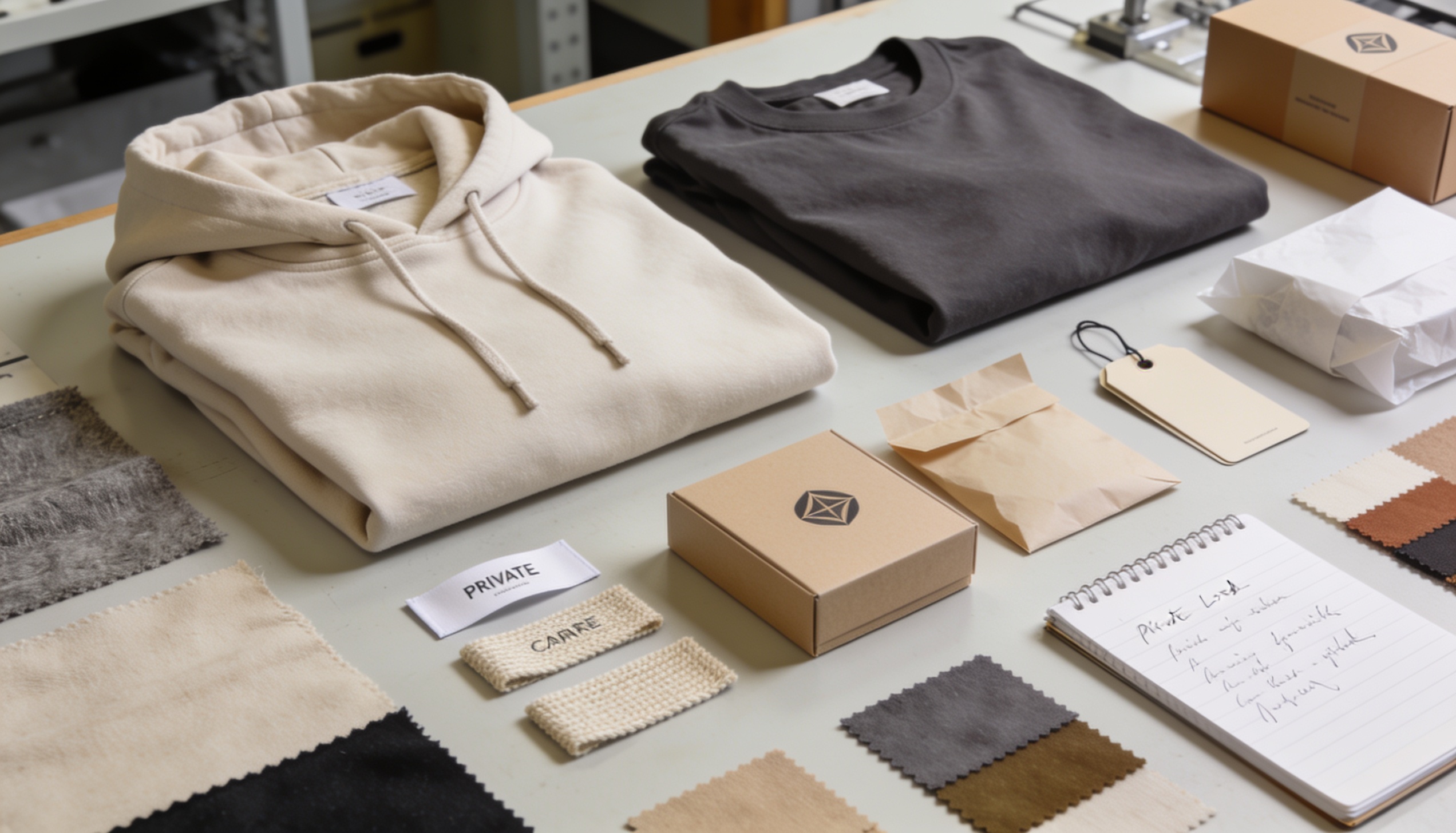
What is private label clothing production?
Private label clothing production is the process of manufacturing garments under a brand’s own identity. The manufacturer produces the clothing, while the brand controls the design direction, labels, trims, packaging, colors, fit, and market positioning. In Turkey, private label clothing production often includes fabric sourcing, sampling, custom labels, printing, embroidery, bulk production, quality control, packing, and export preparation.
Private label clothing production gives fashion brands the ability to sell garments under their own name without owning a factory. For many startups, streetwear labels, online boutiques, and established brands, this model is the most practical way to turn a collection idea into a physical product.
Turkey is a strong destination for private label clothing because the country has a mature textile ecosystem. Brands can access fabrics, trims, sampling support, printing, embroidery, garment washing, labels, packaging, quality control, and export-oriented manufacturing within one connected production environment.
A successful private label project is not only about placing a logo on a garment. It requires the right fabric, a clear fit, consistent sizing, suitable finishing, reliable production planning, and brand details that feel intentional. This guide explains how private label clothing production in Turkey works and what brands should prepare before contacting a manufacturer.
Why Brands Choose Turkey for Private Label Clothing
Fashion brands choose Turkey for private label clothing because it offers a strong balance of production experience, fabric access, quality potential, communication, and logistics. For brands selling in Europe, Turkey can also reduce some of the distance-related challenges that come with manufacturing farther away.
The main advantages include:
- Access to a wide range of fabrics and trims
- Experienced clothing manufacturers
- Sampling and product development support
- Printing, embroidery, washing, and finishing services
- Custom labels, hangtags, and packaging options
- Shorter shipping routes to European markets
- Strong experience with export-focused production
- Practical communication for international buyers
For a wider understanding of the country’s production ecosystem, read our full guide to textile manufacturing in Turkey.
Practical insight for new brands
Private label production works best when the brand already knows what it wants to sell. A manufacturer can support development, but the brand should still define its customer, product category, quality level, price position, and visual identity before requesting a quote.
How Private Label Clothing Production Works
Private label production usually follows a structured process. The exact workflow depends on the product, quantity, fabric choice, customization level, and supplier, but most projects move through similar stages.
1. Brand and product direction
The process starts with a clear product direction. A brand should define what it wants to produce and why the product should exist. This does not always require a complete technical file at the beginning, but the more detail a brand provides, the more accurate the development process becomes.
Useful preparation includes:
- Product category
- Reference images
- Target fit
- Fabric direction
- Color palette
- Logo files
- Brand labels
- Packaging expectations
- Estimated order quantity
- Target retail price
2. Fabric sourcing
Fabric is the foundation of private label clothing. A basic T-shirt, premium hoodie, casual tracksuit, or oversized sweatshirt can feel completely different depending on the fabric choice.
Brands can work with available stock fabrics or develop custom fabrics depending on their budget, timeline, and production quantity. For a detailed explanation, see our guide to fabric sourcing in Istanbul.
3. Sampling
Sampling turns the idea into a physical garment. This stage helps the brand check fit, fabric, stitching, print placement, embroidery quality, label position, and overall product feel.
A sample should be reviewed carefully. It is much easier to correct sleeve length, hood shape, waistband tension, label placement, or print size before bulk production begins.
4. Branding details
Private label clothing is shaped by details. Neck labels, care labels, woven labels, hangtags, zipper pulls, drawcord tips, packaging, polybags, stickers, and swing tags all contribute to the brand experience.
These details should be planned early. Late branding decisions can delay production because trims, labels, and packaging may need separate development and approval.
5. Bulk production
Once the sample, fabric, colors, labels, and pricing are approved, the manufacturer can begin production. Bulk production may include fabric ordering, cutting, sewing, printing, embroidery, washing, labeling, pressing, quality control, packing, and export preparation.
6. Quality control and delivery
Quality control checks whether the approved sample has been reproduced consistently. It should cover measurements, stitching, color, fabric defects, labels, prints, embroidery, packaging, and final presentation.
Common Private Label Clothing Products in Turkey
Turkey can support many private label clothing categories. The right manufacturer depends on the specific product, required quality level, and technical needs.
Common private label products include:
- T-shirts and long sleeves
- Hoodies and sweatshirts
- Sweatpants and joggers
- Shorts and tracksuits
- Oversized streetwear pieces
- Denim jeans and jackets
- Woven shirts and trousers
- Knitwear and sweaters
- Activewear and casualwear
- Loungewear and basics collections
A brand focused on hoodies, sweatpants, oversized T-shirts, and graphic garments should also read our guide to streetwear manufacturing in Turkey, because streetwear production has specific fit, fabric, and finishing requirements.
Fabric Sourcing and Material Decisions
The fabric decision affects nearly every part of the product: cost, fit, weight, shrinkage, comfort, durability, color, print performance, embroidery result, and customer perception. In private label clothing, material choice should match the brand position.
For example, a premium basics brand may need stable cotton jersey with good recovery and a soft hand feel. A streetwear label may need heavyweight fleece or French terry with enough structure to support oversized silhouettes. A summer resort brand may need breathable linen blends or lightweight woven fabrics.
Stock fabrics
Stock fabrics can be useful for brands that want faster sampling, lower risk, and more realistic entry quantities. They are often suitable for early collections, limited drops, and product testing.
Custom fabrics
Custom fabric development can support stronger brand identity, but it usually requires higher minimums, longer development time, and more technical clarity. It may be better for brands with established demand or long-term core products.
Fabric testing
Brands should check fabric weight, composition, shrinkage, color consistency, hand feel, stretch, recovery, pilling, washing behavior, and decoration compatibility. A fabric should be approved in the finished sample, not only as a swatch.
Private label quality starts before sewing. It starts with the fabric decision, the fit direction, and the small brand details customers notice when they touch the garment.
Labels, Trims, Packaging, and Brand Identity
Private label clothing is often judged by details that seem small during production but feel important to the customer. A strong brand experience can be built through consistent use of labels, trims, finishing, and packaging.
Neck labels and care labels
Neck labels and care labels should be clear, comfortable, and aligned with the brand image. Some brands choose woven labels, while others use printed neck labels for a softer feel, especially on T-shirts and activewear.
Woven labels and patches
Woven labels, sleeve labels, hem labels, rubber patches, leather patches, and branded trims can help create a recognizable product identity. They should be designed with proportion and placement in mind.
Hangtags and packaging
Hangtags, branded polybags, stickers, tissue paper, and packaging inserts can improve presentation, especially for e-commerce brands. Packaging should look premium, but it also needs to be practical for packing, shipping, and storage.
Print and embroidery
Printing and embroidery are common in private label clothing, especially for streetwear, casualwear, and promotional collections. The technique should fit the fabric and the design. Heavy embroidery on the wrong fabric can distort the garment, while poor print placement can make a strong design feel careless.
Sampling and Product Development
Sampling is where private label projects succeed or fail. A sample is not only a preview; it is a test of the garment’s construction, fabric behavior, sizing, branding, and production feasibility.
When reviewing a sample, brands should check:
- Overall fit and proportions
- Fabric weight and hand feel
- Stitching quality
- Print or embroidery placement
- Label position
- Trims and finishing
- Color accuracy
- Measurements against the size chart
- Washing and shrinkage behavior
Feedback should be specific. Instead of saying “make it better,” explain what needs to change: increase body length, reduce sleeve width, use a heavier rib, adjust logo size, change drawcord color, or improve collar shape.
Example: private label hoodie
A private label hoodie may require heavyweight fleece, matching rib, a specific oversized fit, puff print on the chest, embroidery on the sleeve, woven neck label, care label, branded hangtag, and custom polybag. Each detail should be confirmed before bulk production begins.
MOQ, Pricing, and Production Planning
Minimum order quantity is one of the most important commercial details in private label clothing production. MOQ depends on the product, fabric, color, trims, customization level, and manufacturer.
Brands often ask for very small quantities with fully custom fabric, labels, prints, embroidery, packaging, and multiple colors. In practice, every customization adds complexity. Fabric may have its own minimums. Dyeing may have minimums. Labels and packaging may also require separate minimum quantities.
What affects pricing?
Private label clothing pricing may be affected by:
- Fabric type and weight
- Order quantity
- Number of colors and sizes
- Garment complexity
- Printing or embroidery
- Labels and trims
- Washing and finishing
- Packaging requirements
- Quality control expectations
- Export and logistics preparation
Why clear planning matters
A manufacturer cannot quote accurately without enough detail. A basic hoodie, a heavyweight washed hoodie, and a fully branded embroidered hoodie may all sound similar in conversation, but they are very different in production.
Brands should ask what is included in the price and what is separate. This avoids surprises later in the project.
Quality Control and Consistency
Quality control is especially important in private label clothing because the final customer sees the product as the brand’s responsibility. They do not know which factory produced the garment. They judge the brand.
A proper quality control process should check:
- Measurements and size consistency
- Fabric defects
- Stitching and seams
- Print and embroidery accuracy
- Label placement
- Color consistency
- Trims and accessories
- Packaging quality
- Final presentation
The approved sample should be used as the production reference. If the bulk order differs from the approved sample in fit, fabric, labels, or finishing, the brand experience becomes inconsistent.
Why Istanbul Matters for Private Label Clothing
Istanbul is one of the most practical locations for private label clothing production in Turkey because it brings together multiple parts of the supply chain. Fabric suppliers, garment workshops, sampling teams, label suppliers, print houses, embroidery services, packaging providers, and logistics companies can often be coordinated within the city’s textile network.
For fashion brands, this matters because private label production requires coordination. A label must match the garment. A fabric must work with the pattern. A print must work on the selected material. Packaging must fit the folded product. Istanbul’s connected ecosystem can make these steps easier to manage.
Brands that want to understand supplier selection in the city can read our guide to choosing a clothing manufacturer in Istanbul.
For brands looking for an actual production partner in Istanbul, Istanbul Factory is one example of a clothing manufacturer working with fashion brands, private label projects, and streetwear collections.
How to Choose a Private Label Clothing Manufacturer in Turkey
Choosing the right manufacturer is the most important part of private label production. A good partner should understand both manufacturing and brand development. They should be realistic, clear, and able to explain what is possible before production begins.
Before choosing a manufacturer, ask:
- Do they specialize in your product category?
- Can they support fabric sourcing?
- Do they offer sampling before bulk production?
- Can they handle private labels, hangtags, and packaging?
- Do they support printing, embroidery, or washing?
- What are their MOQs by style and color?
- What is included in the quoted price?
- How do they manage quality control?
- Can they provide production updates?
- Do they have export experience?
Look for product-category experience
A manufacturer should have experience with the type of garment you want to produce. A streetwear hoodie, a fitted activewear legging, a woven shirt, and a denim jacket require different machinery, patterns, fabric knowledge, and quality checks.
Check communication quality early
Communication during the first inquiry often shows how the project will feel later. If a supplier avoids clear answers about MOQ, sampling, fabric, pricing, or timelines, the brand should be careful.
Review samples before committing to bulk
A sample protects both the brand and the manufacturer. It confirms fit, fabric, construction, and details before bulk production. Skipping sampling to save time often creates bigger problems later.
Final Thoughts
Private label clothing production in Turkey can be a strong option for brands that want to create garments under their own identity while using an experienced production ecosystem. The country offers access to fabrics, garment manufacturing, sampling, labels, trims, printing, embroidery, finishing, and export logistics.
The best results come from preparation. Brands should define their product clearly, understand their customer, choose the right fabric, approve samples carefully, plan branding details early, and work with a manufacturer that understands their category.
Private label clothing is not just production with a logo. It is the process of turning a brand’s quality promise into a physical product. When fabric, fit, finishing, labels, and packaging work together, the garment feels like it belongs to the brand from the first touch.
FAQ: Private Label Clothing Production in Turkey
What is private label clothing production?
Private label clothing production is the process of manufacturing garments under a brand’s own name, labels, design direction, packaging, and identity. It may include fabric sourcing, sampling, production, printing, embroidery, labeling, quality control, and export preparation.
Why do brands choose Turkey for private label clothing?
Brands choose Turkey for private label clothing because it offers fabric access, garment manufacturing experience, shorter shipping routes to Europe, sampling support, flexible development, branding services, and export-oriented production.
What products can be made as private label clothing in Turkey?
Private label clothing in Turkey can include T-shirts, hoodies, sweatshirts, sweatpants, streetwear, casualwear, activewear, denim, woven garments, knitwear, loungewear, and branded basics.
What should a brand prepare before contacting a private label manufacturer?
A brand should prepare product references, target quantities, size range, fabric direction, colors, logo files, label details, packaging expectations, budget range, and any available tech packs or measurement charts.
Is Istanbul a good place for private label clothing production?
Yes. Istanbul is a strong location for private label clothing production because it connects fabric suppliers, garment manufacturers, sampling teams, printing and embroidery services, label suppliers, packaging providers, and export logistics.