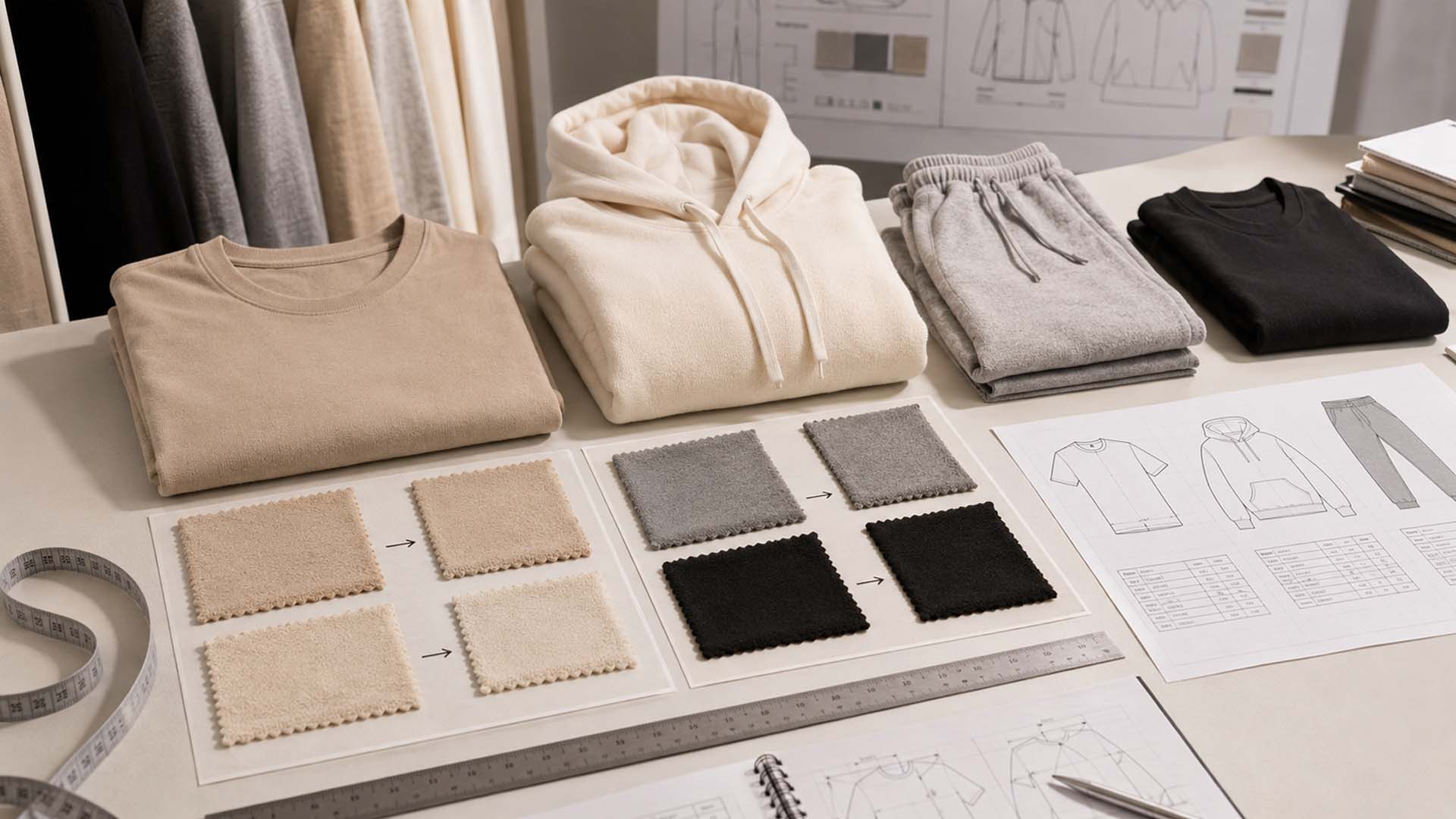
What is fabric shrinkage in clothing production?
Fabric shrinkage in clothing production is the change in fabric or garment dimensions after washing, drying, steaming, or finishing. It matters because shrinkage can change the fit of T-shirts, hoodies, sweatpants, and other garments after the customer wears and washes them.
Fabric shrinkage clothing production planning should never be treated as a small technical detail. A garment can look correct in the sample room, but if the fabric shrinks after washing, the approved fit can change completely. For a fashion brand, that means size complaints, returns, inconsistent batches, and damage to customer trust.
Shrinkage is especially important for cotton jersey, French terry, fleece, rib, and other knitted fabrics used in casualwear and streetwear. These materials are comfortable and commercial, but they must be tested correctly before bulk production.
Why Shrinkage Matters Before Bulk Production
Bulk production multiplies every decision. If a pattern is approved without checking shrinkage, the same mistake can appear across hundreds or thousands of garments. A hoodie that loses width after washing may feel tight. A T-shirt that shrinks in length may no longer match the brand’s fit standard.
Shrinkage affects:
- Final garment measurements
- Fit consistency across sizes
- Pattern correction and grading
- Customer washing experience
- Return rates and product reviews
- Repeat orders and batch consistency
Brands working with a clothing manufacturer in Istanbul should confirm how fabric shrinkage is checked before approving bulk production.
What Causes Fabric Shrinkage?
Shrinkage usually happens when fibers, yarns, and fabric structures relax after exposure to water, heat, mechanical movement, or steam. The exact result depends on fabric composition, knit structure, finishing, washing method, and drying temperature.
Composition
Cotton and cotton-rich fabrics may shrink differently from polyester blends. Elastane can also affect recovery and stability. Composition should be discussed early during fabric sourcing in Istanbul, especially for products that need stable measurements.
Fabric structure and GSM
Jersey, French terry, fleece, rib, and interlock do not behave the same way. A heavy fleece hoodie and a lightweight jersey T-shirt require different testing expectations. GSM gives useful information about weight, but shrinkage testing shows how the fabric performs after use.
Washing and finishing
Washing, brushing, dyeing, compacting, and finishing can all influence shrinkage. If fabric has not been stabilized properly, the garment may change more after the first home wash.
How Shrinkage Testing Works
Shrinkage testing compares measurements before and after washing or finishing. The test can be done on fabric panels, sample garments, or both. For serious production, testing should be completed before the final sample and before cutting bulk fabric.
A practical shrinkage control process includes:
- Measure the fabric or garment before washing
- Wash and dry using a realistic care method
- Measure again after washing
- Calculate the shrinkage percentage
- Adjust the pattern or size chart if needed
- Approve the final sample only after corrections
Practical insight
If a sweatshirt body length shrinks by 3%, a 70 cm garment may lose about 2.1 cm after washing. That small number can be the difference between a premium fit and a customer complaint.
When discussing sample testing and quality control, brands can review how an Istanbul-based partner such as Istanbul Factory supports garment development, production checks, and fabric-related decisions.
Examples for T-Shirts, Hoodies, and Sweatpants
T-shirts
T-shirts are often made from cotton jersey. Shrinkage can affect body length, sleeve length, width, and neckline shape. New brands should test washing behavior before choosing final measurements.
Hoodies
Hoodies usually use French terry or fleece. Shrinkage can change chest width, body length, sleeve length, hood shape, and rib balance. This matters even more for oversized streetwear fits. Read more in our guide to streetwear manufacturing in Turkey.
Sweatpants
Sweatpants need stable waist, inseam, outseam, and leg opening measurements. If the fabric shrinks unevenly, the garment may twist, shorten, or lose its intended shape. This is important for private label clothing production where consistency protects the brand name.
Why Istanbul and Turkey Matter for Shrinkage Control
Turkey has a strong textile manufacturing base, and Istanbul connects fabric suppliers, sampling teams, garment workshops, printing, embroidery, finishing, and export logistics. This makes it easier to test fabric, adjust samples, and communicate corrections before bulk production. For a wider view, read our guide to textile manufacturing in Turkey.
For fashion brands, the best result comes from testing early, recording measurements, approving samples carefully, and treating shrinkage as part of quality control rather than a problem to solve after shipment.
FAQ: Fabric Shrinkage in Clothing Production
What is fabric shrinkage in clothing production?
Fabric shrinkage is the change in fabric or garment dimensions after washing, drying, steaming, or finishing. It affects fit, sizing, and final product quality.
Why should shrinkage be tested before bulk production?
Shrinkage should be tested before bulk production because it helps brands adjust patterns, confirm measurements, reduce size problems, and avoid costly production mistakes.
Which fabrics shrink the most?
Cotton-rich knits such as jersey, French terry, rib, and fleece can shrink if they are not properly tested, stabilized, or finished before production.
Can shrinkage be completely prevented?
Shrinkage cannot always be fully prevented, but it can be controlled through testing, pre-shrinking, correct finishing, washing trials, and pattern adjustment.
How does shrinkage affect fashion brands?
Shrinkage can affect sizing, fit, customer satisfaction, return rates, reviews, repeat orders, and the brand’s overall quality perception.