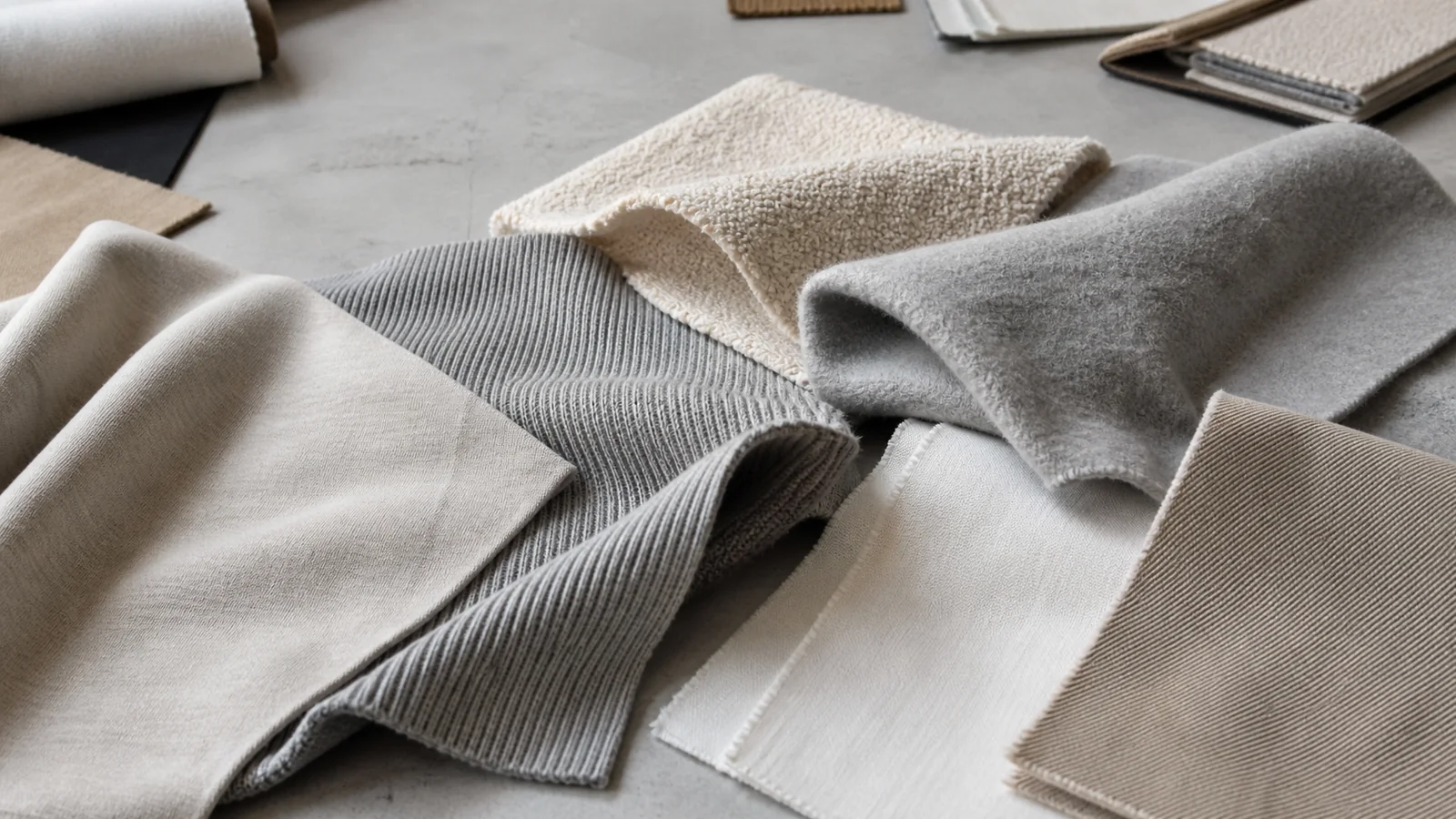
Fabric is a textile structure made by interlacing, interlooping, bonding, or otherwise assembling fibers or yarns. In apparel development, a useful fabric specification goes beyond fiber content: construction, yarn, weight, density, stretch, finishing, color, and tested performance all affect how the finished garment behaves.
How fabric construction changes the garment
Woven fabrics are formed by interlacing warp and filling yarns, while knitted fabrics are formed from interconnected loops. That structural difference influences stretch, drape, dimensional stability, edge behavior, and the production methods a garment requires. A cotton label alone cannot tell a buyer whether a material is jersey, rib, interlock, fleece, denim, poplin, or twill.
Loops, stretch, and recovery
Single jersey is flexible and may curl at cut edges. Rib has alternating face and back wales and is valued where stretch and recovery are needed. Double knits such as interlock are generally more stable and structured.
Warp, filling, and stability
Plain, twill, and satin weaves organize yarns differently. The chosen weave affects surface, drape, strength, snagging behavior, and suitability for shirts, trousers, denim, outerwear, or linings.
Weight is one variable
GSM measures mass per square meter. It helps compare fabrics, but it does not independently define thickness, warmth, durability, or quality.
Test the finished material
Shrinkage, skew, pilling, colorfastness, stretch, recovery, and appearance after laundering should be evaluated against the product’s end use.
What buyers should specify
A development brief should connect measurable requirements with the intended garment. For a T-shirt, that may include fiber content, yarn type, knit structure, target GSM, usable width, color, finish, shrinkage method, spirality or skew expectations, and decoration method. For a hoodie, face appearance, loop or brushed back, rib compatibility, seam bulk, pilling, and laundering behavior may need more attention.
GSM does not equal quality
Two fabrics at the same GSM can feel and perform differently because their yarn count, stitch density, fiber blend, loop geometry, brushing, compaction, and other finishes differ. Compare approved fabric standards and test results rather than buying by weight alone.
Fabric decisions also affect price and production planning. Stock fabric can shorten sampling and reduce development risk, while custom knitting or dyeing may introduce separate mill minimums and longer approval steps. A supplier’s garment MOQ does not remove the minimums attached to fabric production.
Fabric guides
A practical fabric approval sequence
- Define the garment, wearer, season, silhouette, and care expectations.
- Translate the design into composition, construction, weight, color, finish, width, and performance requirements.
- Review swatches, but evaluate the fabric again in a sewn and decorated sample.
- Test relevant risks such as dimensional change, skew, pilling, and colorfastness using agreed methods.
- Approve a physical standard and keep it available for bulk comparison and quality control.
Continue with Yarns & Fibers to understand the raw materials behind fabric behavior, or visit Quality & Testing to plan verification.
Technical background: CottonWorks on single and double knits and weaving basics.