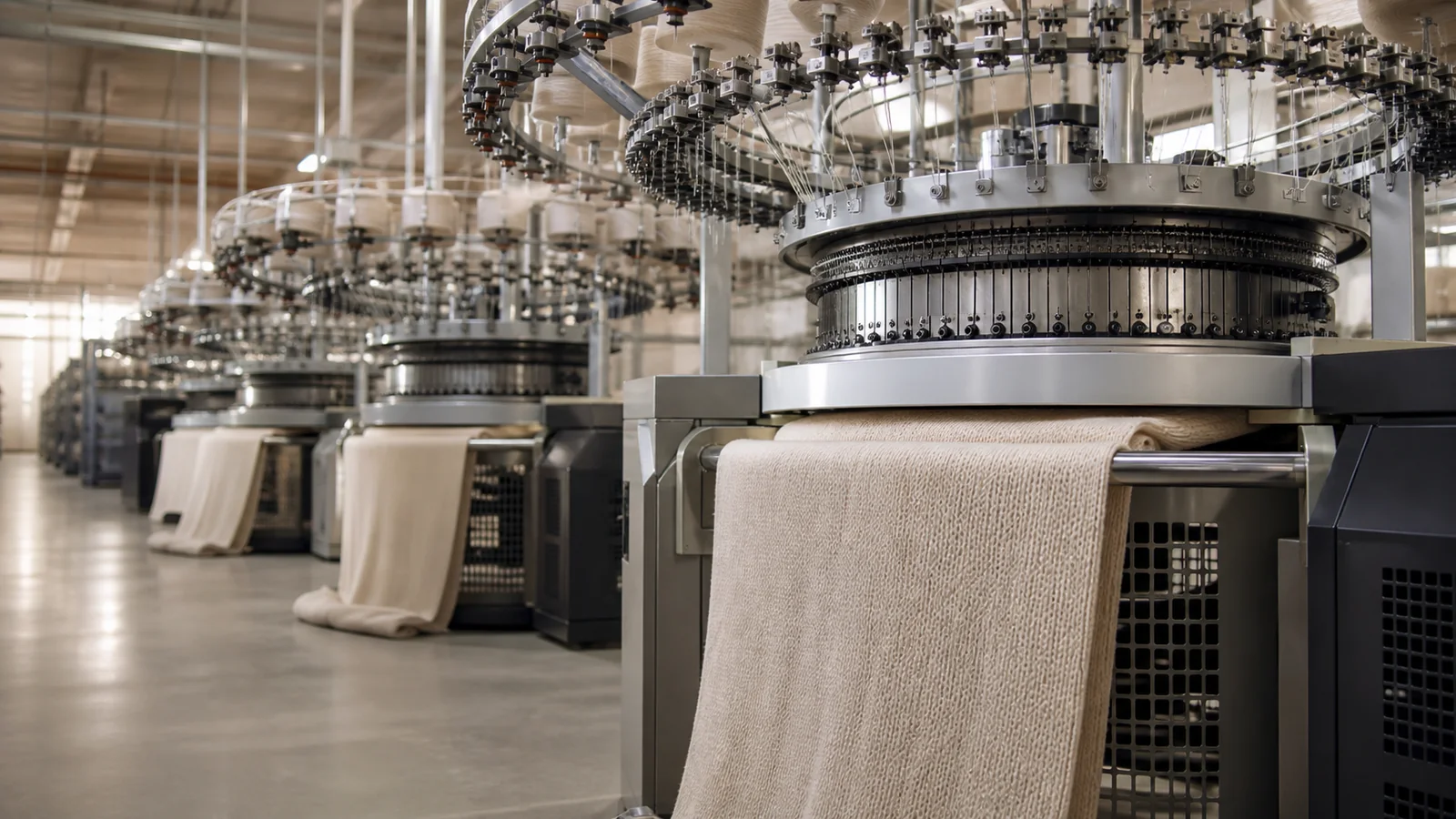
Textile production is the sequence that converts fibers into yarns, fabrics, and finished textile materials. The route can include fiber preparation, spinning or filament formation, knitting or weaving, preparation, coloration, finishing, inspection, and packing. Each stage adds value and can also introduce variability that appears later in garment production.
The fiber-to-fabric sequence
- Fiber selection and preparation: material identity and properties are defined, then fibers are cleaned, blended, aligned, or otherwise prepared.
- Yarn production: staple fibers are spun or continuous filaments are formed and, where needed, textured, twisted, or plied.
- Fabric formation: yarns are knitted into looped structures or woven through interlacing warp and filling systems.
- Preparation and coloration: the material is prepared, dyed, or printed at a stage suited to the product.
- Finishing and inspection: mechanical or chemical treatments create the required hand and performance before the fabric is measured, inspected, and released.
Not every product follows exactly this linear route. Nonwovens use other formation methods; yarn-dyed fabrics introduce color before fabric formation; garment dyeing occurs after sewing. The correct map depends on the product.
Key production systems
Build a usable yarn
Fiber length, preparation, drafting, twist, count, and spinning system influence uniformity, strength, hairiness, processing, and surface character.
Create fabric with loops
Circular and flat knitting can produce jersey, rib, interlock, terry, fleece, and shaped knitwear with different stretch and stability.
Interlace warp and filling
Loom setup, weave, yarn selection, and density determine the base structure for shirting, denim, twill, canvas, linings, and many other fabrics.
Prepare, color, and finish
Preparation, dyeing, printing, washing, and finishing define shade, hand, dimensions, and many performance characteristics.
Production decisions buyers can control
A buyer does not need to operate the machinery, but should know which variables belong in the specification and approval process. Fiber percentages, yarn count, construction, finished GSM, usable width, color standard, finish, shrinkage, skew, pilling, colorfastness, inspection method, packing, and lot traceability can all influence cost and repeatability.
Lead time is not one universal factory number. A stock fabric may move quickly into sampling, while custom knitting, yarn dyeing, piece dyeing, special finishing, and laboratory testing add dependent steps. The critical path should identify which approval unlocks the next stage and what happens if the shade, hand, or test result fails.
Control the handoffs
Many faults become expensive because they are discovered one stage late. Confirm yarn and construction before finishing, approve finished fabric before cutting, and approve the decorated garment before bulk production.
How textile and garment production connect
The garment factory receives the consequences of earlier textile decisions. Fabric relaxation affects cutting; shrinkage affects patterns and finished measurements; shade grouping affects panel matching; surface finish affects printing and embroidery; width and usable yield affect consumption and price. A technically correct textile can still be unsuitable for the proposed garment.
Before placing an order, ask which operations are performed by the named supplier and which are subcontracted. Confirm responsibility for fabric inspection, testing, shade control, corrective action, and approval records. A coordinated supply chain is useful only when ownership of each decision is clear.
Continue with Yarns & Fibers, Fabrics, Dyeing & Finishing, and Garment Manufacturing. For Turkey-specific context, see textile manufacturing in Turkey and fabric sourcing in Istanbul.
Technical background: CottonWorks learning resources on yarn spinning, knit basics, and weaving basics.