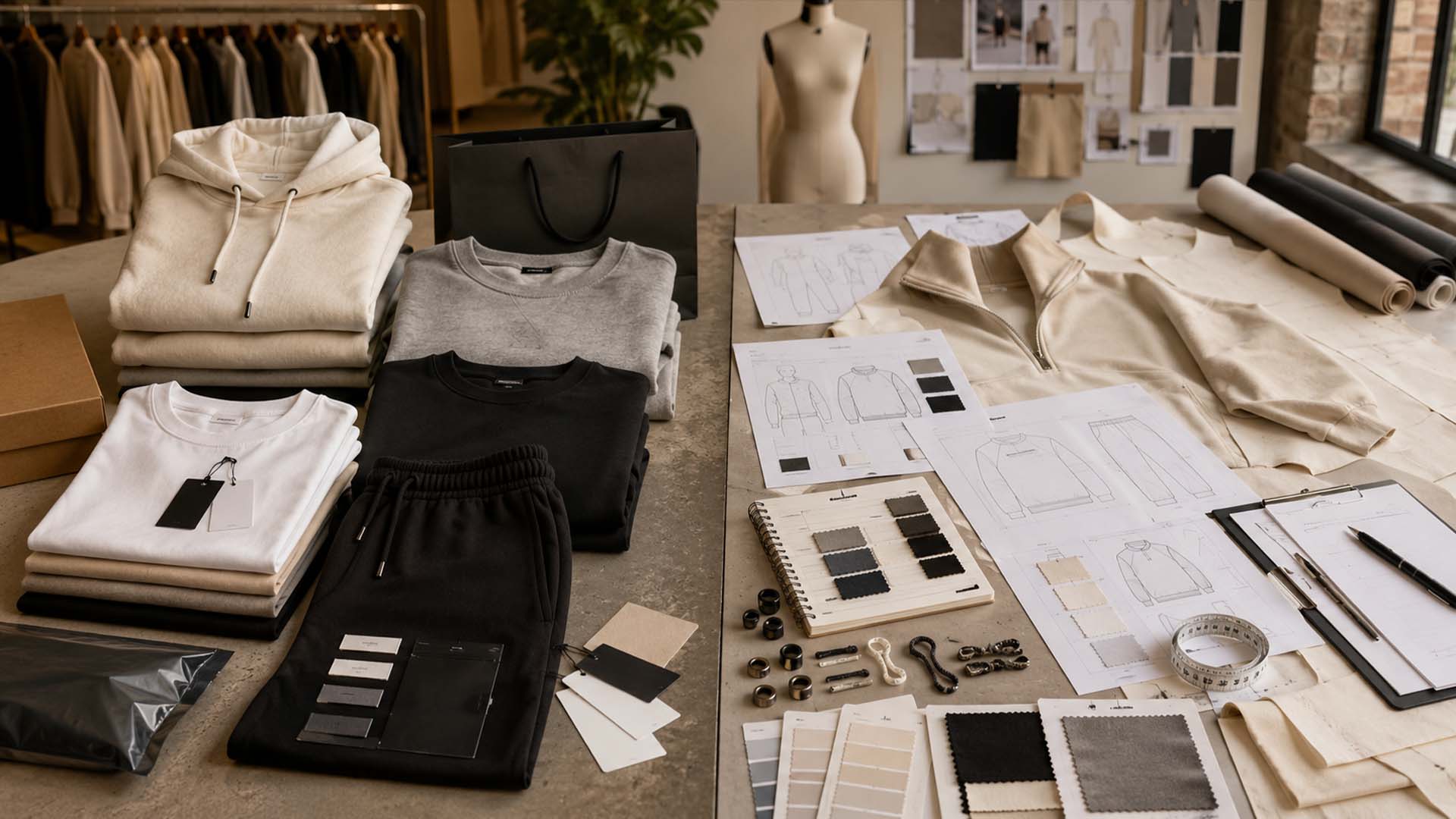
Private label clothing vs custom clothing: quick answer
Private label clothing uses existing or ready-developed garment bases that are produced under your brand name. Custom clothing is developed from your own design, pattern, measurements, materials, trims, and construction details. Private label is usually faster and simpler. Custom production gives more control, but it needs more development work before bulk production.
The difference between private label clothing vs custom clothing is one of the first decisions a fashion brand should understand before contacting a manufacturer. Both models can create professional products, but they serve different business needs.
A startup may need speed and a reliable garment base. A premium streetwear brand may need a unique fit, fabric weight, wash, embroidery placement, or construction. The right choice depends on control, budget, and development time.
What Is Private Label Clothing?
Private label clothing means a manufacturer produces garments for your brand using an existing or ready-developed base. Your identity is added through labels, hangtags, packaging, trims, prints, embroidery, and color direction.
This model is useful when you want to launch faster without developing every part of the garment from zero. For example, a brand may choose a proven heavyweight hoodie base, add custom neck labels, apply embroidery, adjust packaging, and sell it under its own brand name.
For a deeper explanation of this model, read our guide to private label clothing in Turkey.
Private label is often best for
- New fashion brands testing a first collection
- Brands that need faster launch timing
- Basic T-shirts, hoodies, sweatshirts, and sweatpants
- Collections focused on branding, packaging, and decoration
- Buyers who want fewer development risks before bulk production
What Is Custom Clothing Production?
Custom clothing production means the garment is developed according to your own product requirements. This can include a new pattern, specific measurements, fabric composition, GSM, stitching method, fit, artwork placement, labels, trims, washing, and finishing.
Custom production is stronger when your product must feel different from standard blanks. A streetwear brand may need a dropped shoulder, boxy fit, heavy French terry, puff print, or unique sweatpants silhouette. These details require sampling before bulk production.
If you are comparing suppliers, our guide to choosing a clothing manufacturer in Istanbul explains what to check before starting.
Private Label Clothing vs Custom Clothing: Main Differences
1. Speed
Private label is usually faster because the garment base already exists. Custom clothing takes longer because the pattern, sample, fit, fabric, and construction details must be tested before production.
2. Cost and development
Private label often has lower development cost because fewer details need to be created from scratch. Custom production may require pattern making, sample revisions, fabric testing, trims development, and more technical communication.
3. Brand uniqueness
Custom clothing gives more product uniqueness. Private label can still look premium, but differentiation usually comes from fabric choice, branding, decoration, packaging, and presentation rather than a completely original garment structure.
4. MOQ planning
Private label may be more manageable for smaller brands because existing garment bases can simplify production planning. Custom clothing may require higher quantities depending on fabric sourcing, dyeing, trims, printing setup, and factory workflow.
Practical example
A brand launching cream, black, and grey hoodies with embroidery may start with private label production. A brand that wants a special cropped hoodie with custom shoulder width, heavy rib, unique wash, and exclusive fleece should plan for custom production.
Which Option Should Your Brand Choose?
Choose private label clothing if your priority is speed, simpler development, controlled risk, and branded garments based on proven styles. It is often the better route for first drops, capsule collections, merch, and brands testing market demand.
Choose custom clothing if your brand needs a unique fit, original pattern, specific fabric behavior, special construction, or a product that must stand apart from common blanks.
For streetwear-specific production decisions, read our guide to working with a streetwear manufacturer in Turkey.
Why Turkey and Istanbul Matter for Both Models
Turkey is relevant because brands can access fabric suppliers, garment manufacturers, printing, embroidery, labels, packaging, and export support within a connected ecosystem. Istanbul is especially practical for sourcing and production coordination.
Private label projects need reliable bases, branding, packaging, and QC. Custom projects need sampling, pattern work, fabric sourcing, and technical communication. To understand the wider supply chain, read our guide to textile manufacturing in Turkey and our article on fabric sourcing in Istanbul.
For brands looking for Istanbul-based production support, Istanbul Factory is one example of a manufacturer working with private label clothing, custom clothing, streetwear, sampling, and full production support.
The better choice is not always the most complex option. The right production model is the one that matches your brand stage, budget, timeline, and product expectations.
FAQ: Private Label Clothing vs Custom Clothing
What is the difference between private label clothing and custom clothing?
Private label clothing uses existing or ready-developed garment bases that are branded for your label. Custom clothing is developed from your own design, measurements, materials, trims, and construction details.
Is private label clothing better for new brands?
It can be. Private label clothing is usually faster and simpler than full custom production, which makes it useful for first collections and market testing.
When should a brand choose custom clothing production?
Choose custom production when you need a unique fit, original pattern, specific fabric, special construction, custom artwork placement, or exclusive product details.
Which option has lower MOQ?
Private label may sometimes have more manageable MOQ because the base style already exists. Custom clothing can require higher planning depending on fabric, trims, sampling, and production setup.
Can private label clothing still look premium?
Yes. Premium private label depends on fabric quality, fit, stitching, branding, decoration, packaging, and final quality control.