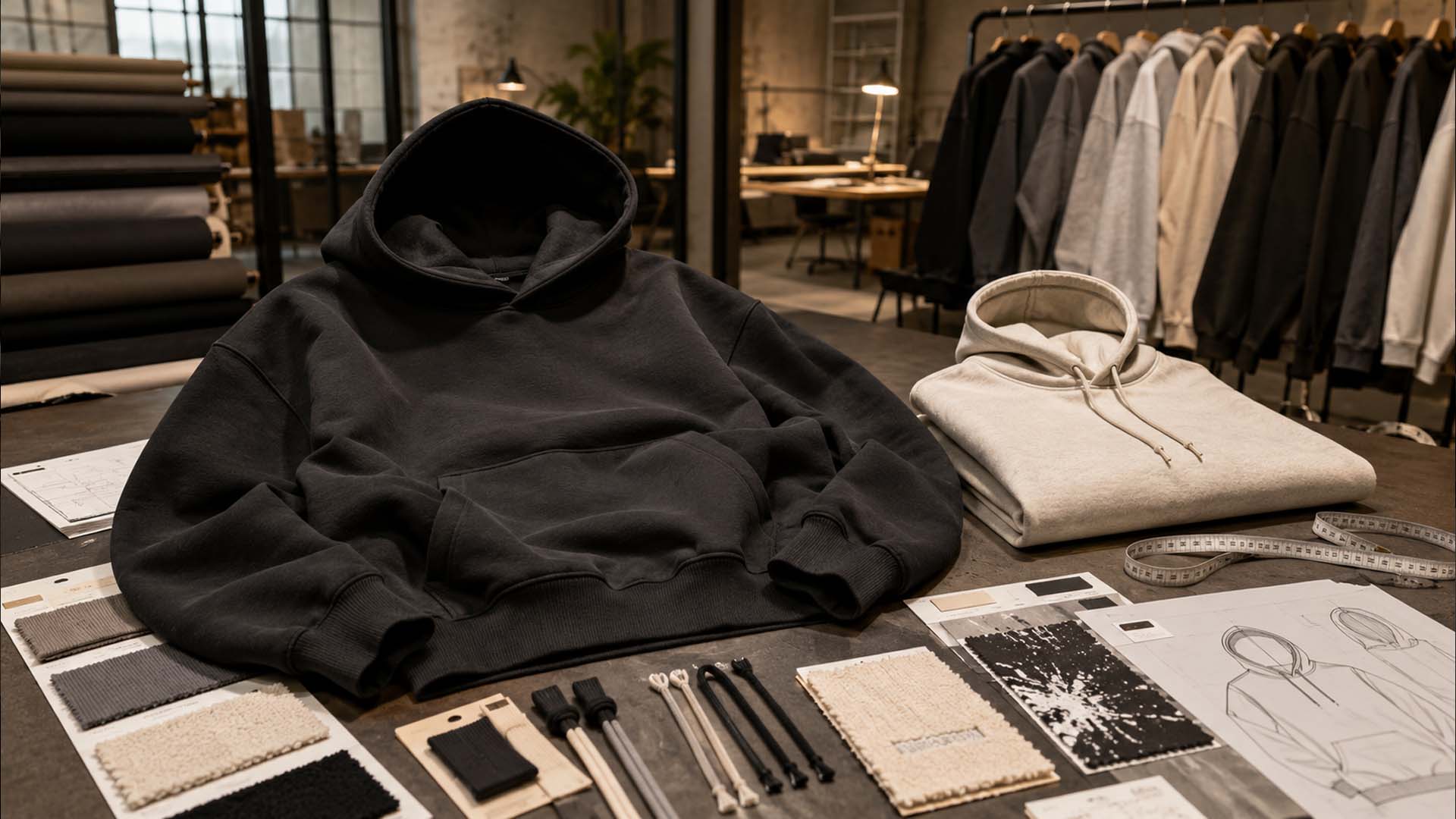
How do you manufacture hoodies for a streetwear brand?
To manufacture hoodies, a brand should define the product brief, choose the right fleece or French terry, decide GSM, develop the fit, test hood shape and rib quality, confirm print or embroidery, approve a sample, and control measurements before bulk production. A hoodie is simple to wear, but technically detailed to produce well.
Hoodies are one of the strongest products in streetwear because they carry the brand’s identity clearly. Fabric weight, shoulder shape, hood structure, rib tension, decoration, and finishing all affect how premium the garment feels. A weak hoodie may look fine in a photo, but customers notice poor fit, twisting seams, loose rib, thin fleece, or cracked prints after a few wears.
Choose the Right Hoodie Fabric
Fabric is the first serious decision in hoodie manufacturing. Most premium streetwear hoodies use cotton fleece, brushed fleece, or French terry. Brushed fleece feels warmer and softer inside. French terry has looped yarns on the inner side and can feel cleaner, less bulky, and more suitable for transitional seasons.
The best fabric depends on the brand’s target customer, season, price level, and desired fit. A heavyweight oversized hoodie needs a fabric that holds shape. A lighter hoodie may need more drape and comfort. For a deeper sourcing view, read our guide to fabric sourcing in Istanbul.
Decide the GSM and Structure
GSM means grams per square meter. It helps brands compare fabric weight, but it should not be judged alone. A 400 GSM fleece can feel compact and structured, while another 400 GSM fabric may feel softer and looser because of yarn, knit, brushing, and finishing.
- Lightweight hoodies: easier for layering and spring collections.
- Midweight hoodies: practical for everyday streetwear and wider seasons.
- Heavyweight hoodies: stronger premium feel, better structure, and higher cost.
Develop the Fit and Hood Shape
Streetwear hoodies are judged by silhouette. Shoulder drop, body width, sleeve volume, length, and waistband position decide whether the hoodie looks modern or ordinary. Oversized does not mean uncontrolled. The pattern still needs balance.
Hood shape is also important. A premium hood should sit with volume, frame the neckline, and avoid collapsing too flat. Double-layer hoods often feel more substantial, but they add cost and weight. Brands should test the hood on a real sample, not only on a sketch.
Check Rib, Stitching, Pocket, and Trims
Rib quality can make or break a hoodie. Cuffs and waistband should recover after stretch and match the body fabric visually. If the rib is too loose, the hoodie feels cheap. If it is too tight, the silhouette may look squeezed.
Brands should also confirm kangaroo pocket placement, drawcord quality, eyelets, seam construction, neck tape, label position, and washing behavior. For private label projects, labels, hangtags, care labels, and packaging should be included early. Learn more in our guide to private label clothing in Turkey.
Print and Embroidery for Hoodies
Decoration must match the fabric. Heavy fleece may need careful print testing because surface texture can affect sharpness. Puff print, screen print, embroidery, appliqué, and patches all behave differently on hoodie fabric.
Embroidery should be tested for density and backing so it does not pull the fabric or feel too stiff. Large front prints should be checked for cracking, hand feel, placement, and wash resistance before bulk production.
Sampling Before Bulk Production
Sampling is where the hoodie becomes real. A sample should confirm fabric, GSM, fit, hood volume, rib recovery, stitching, pocket placement, print or embroidery, labels, and finishing. One approved sample becomes the reference for bulk production and quality control.
Practical insight
If a brand wants a heavyweight oversized hoodie, the sample should be reviewed after wearing and washing. Shrinkage, sleeve twist, rib recovery, and print behavior are easier to catch before production than after hundreds of pieces are made.
Why Turkey Matters for Hoodie Manufacturing
Turkey is useful for hoodie production because fabric sourcing, sampling, cutting, sewing, printing, embroidery, labels, packaging, and export support can often be managed within one textile ecosystem. Istanbul is especially practical for streetwear brands that need coordination between fabric suppliers and garment production. To understand the broader supply chain, read our guide to textile manufacturing in Turkey.
For brands looking for an Istanbul-based partner for hoodie manufacturing, Istanbul Factory is one example of a manufacturer working with streetwear, private label, and premium casualwear production.
Final Production Checklist
Before confirming bulk production, a streetwear brand should approve the fabric, GSM, fit, size chart, hood shape, rib quality, stitching, pocket placement, decoration method, labels, packaging, and final sample. For a wider manufacturing view, see our guide to a clothing manufacturer in Istanbul and our detailed streetwear manufacturer Turkey guide.
FAQ: How to Manufacture Hoodies
How do you manufacture hoodies for a streetwear brand?
Start with a product brief, select fleece or French terry, define GSM, develop the pattern, test hood shape and rib quality, confirm print or embroidery, approve a sample, and control measurements during bulk production.
What fabric is best for premium hoodies?
Premium hoodies often use cotton fleece, brushed fleece, or high-quality French terry. The best option depends on season, desired structure, softness, decoration, shrinkage, and target price.
What GSM is good for streetwear hoodies?
Many streetwear hoodies use midweight to heavyweight fabrics, often around 320 to 500 GSM. The ideal GSM depends on fit, season, fabric composition, and brand quality level.
Why is sampling important before hoodie production?
Sampling helps confirm fabric, fit, measurements, hood shape, rib recovery, pocket placement, stitching, decoration quality, labels, and finishing before bulk production begins.