What is a tech pack in clothing production?
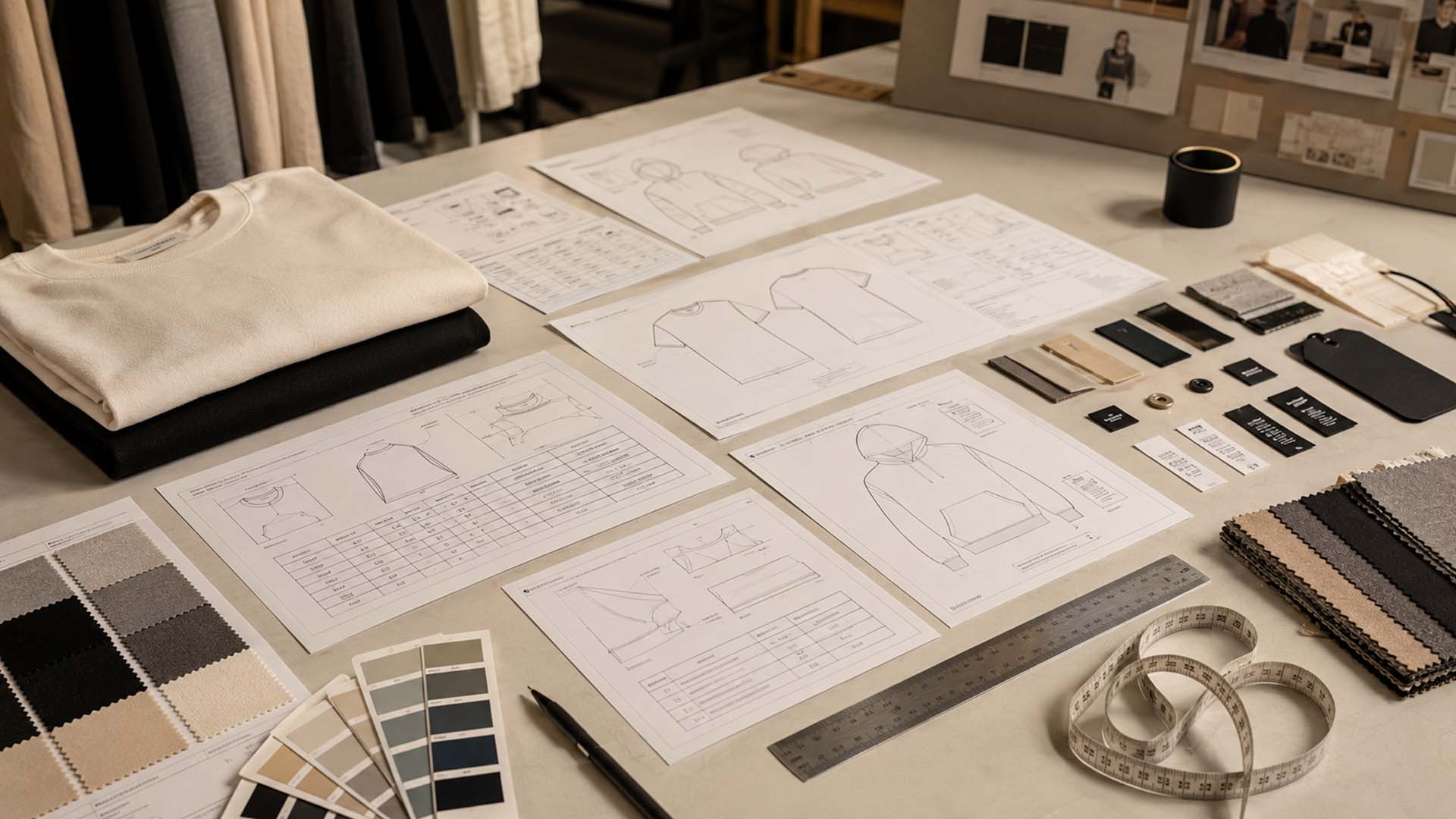
A tech pack in clothing production is a technical document that explains how a garment should be made. It gives the manufacturer clear information about measurements, fabric, trims, labels, artwork, stitching, size grading, and finishing details before sampling or bulk production begins.
For a fashion brand, a tech pack is the bridge between design idea and real garment. A sketch or reference image may show the look, but it rarely explains the exact sleeve length, fabric composition, rib quality, print size, label position, or seam construction. That missing information often becomes expensive during sampling.
When brands ask what is a tech pack in clothing production, the simple answer is this: it is the instruction file your manufacturer uses to build the product correctly. The better the document, the fewer assumptions are left on the production table.
Why a Tech Pack Matters
Garment production depends on details. A hoodie can change completely depending on fabric weight, shoulder drop, hood shape, rib width, pocket position, stitching, and finishing. A T-shirt can look basic, but neckline depth, body length, sleeve opening, fabric shrinkage, and label placement still matter.
A tech pack helps brands:
- Communicate clearly with manufacturers
- Reduce sampling mistakes
- Compare supplier quotes more accurately
- Control fit, fabric, branding, and finishing
- Keep repeat production consistent
If you are still choosing a supplier, read our guide to working with a clothing manufacturer in Istanbul.
What Should Be Inside a Tech Pack?
A strong tech pack does not need to be complicated, but it must be clear. The goal is to remove confusion before fabric is cut or samples are made.
1. Technical sketches
Technical sketches show the garment from the front, back, and sometimes side view. They should show seams, pockets, hood shape, cuffs, hems, zippers, drawcords, panels, and any visible construction detail.
2. Bill of materials
The bill of materials lists the fabric, rib, lining, buttons, zippers, labels, cords, eyelets, patches, packaging, and other components. For fabric planning, it should mention composition, GSM, color, finish, and texture. For sourcing help, see our guide to fabric sourcing in Istanbul.
Measurements and Size Charts
Measurements are one of the most important parts of a tech pack. They tell the factory the target dimensions for each size and help quality control teams check the finished garments.
A measurement chart usually includes:
- Body length
- Chest width
- Shoulder width
- Sleeve length
- Hem width
- Waist and inseam for pants
- Allowed tolerance for production
Practical insight
Do not rely only on size names like S, M, L, or XL. A manufacturer needs actual measurements. One brand’s oversized medium can be another brand’s regular large.
Materials, Labels, Artwork, and Stitching
A tech pack should explain how the garment should feel, look, and be finished. For a private label collection, this includes neck labels, care labels, hangtags, woven patches, packaging, and branding details. Learn more in our guide to private label clothing in Turkey.
Artwork details should include print size, placement, color references, embroidery location, stitch density where relevant, and the file format supplied. Stitching notes should explain seam type, thread color, topstitching, bartacks, rib attachment, and other construction points that affect durability and appearance.
How Tech Packs Improve Sampling
Sampling is where the tech pack becomes practical. The first sample shows whether the pattern, fabric, fit, and branding details are working together. If something changes after sample review, the tech pack should be updated before bulk production.
This is especially important for streetwear, where fit and finishing define the product. Oversized T-shirts, heavyweight hoodies, sweatpants, puff print, and embroidery all require clear instructions. For category-specific guidance, read our guide to streetwear manufacturing in Turkey.
Why Tech Packs Matter When Producing in Turkey
Turkey is a practical production base because fabric suppliers, sampling teams, garment workshops, printing, embroidery, labeling, packaging, and export logistics are often close together. This makes development faster, but it also means information must be organized.
For brands producing with an Istanbul-based partner, Istanbul Factory is one example of a manufacturer that supports fashion brands with sourcing, sampling, private label production, and garment manufacturing.
A tech pack does not replace communication, but it makes communication easier. It gives both brand and manufacturer one shared reference point. That is what protects fit, branding, quality, timing, and cost before the order moves into production.
FAQ: Tech Packs in Clothing Production
What is a tech pack in clothing production?
A tech pack in clothing production is a detailed document that tells the manufacturer how a garment should be made. It usually includes measurements, fabrics, trims, labels, artwork, stitching details, size charts, and construction instructions.
Do new clothing brands need a tech pack?
Yes. A tech pack helps new clothing brands communicate clearly with manufacturers, reduce sampling mistakes, control costs, and keep production more consistent.
What should be included in a tech pack?
A tech pack should include garment sketches, measurements, size charts, fabric details, trims, labels, artwork placements, stitching instructions, colorways, packaging notes, and sample comments.
Can a manufacturer create a sample without a tech pack?
Some manufacturers can create a sample from references, but a tech pack makes the process more accurate. Without one, there is a higher risk of wrong measurements, fabric mistakes, and unclear finishing details.
Is a tech pack important for streetwear production?
Yes. Streetwear often depends on fit, fabric weight, print placement, embroidery, rib quality, and finishing details. A tech pack helps keep those details clear before sampling and bulk production.