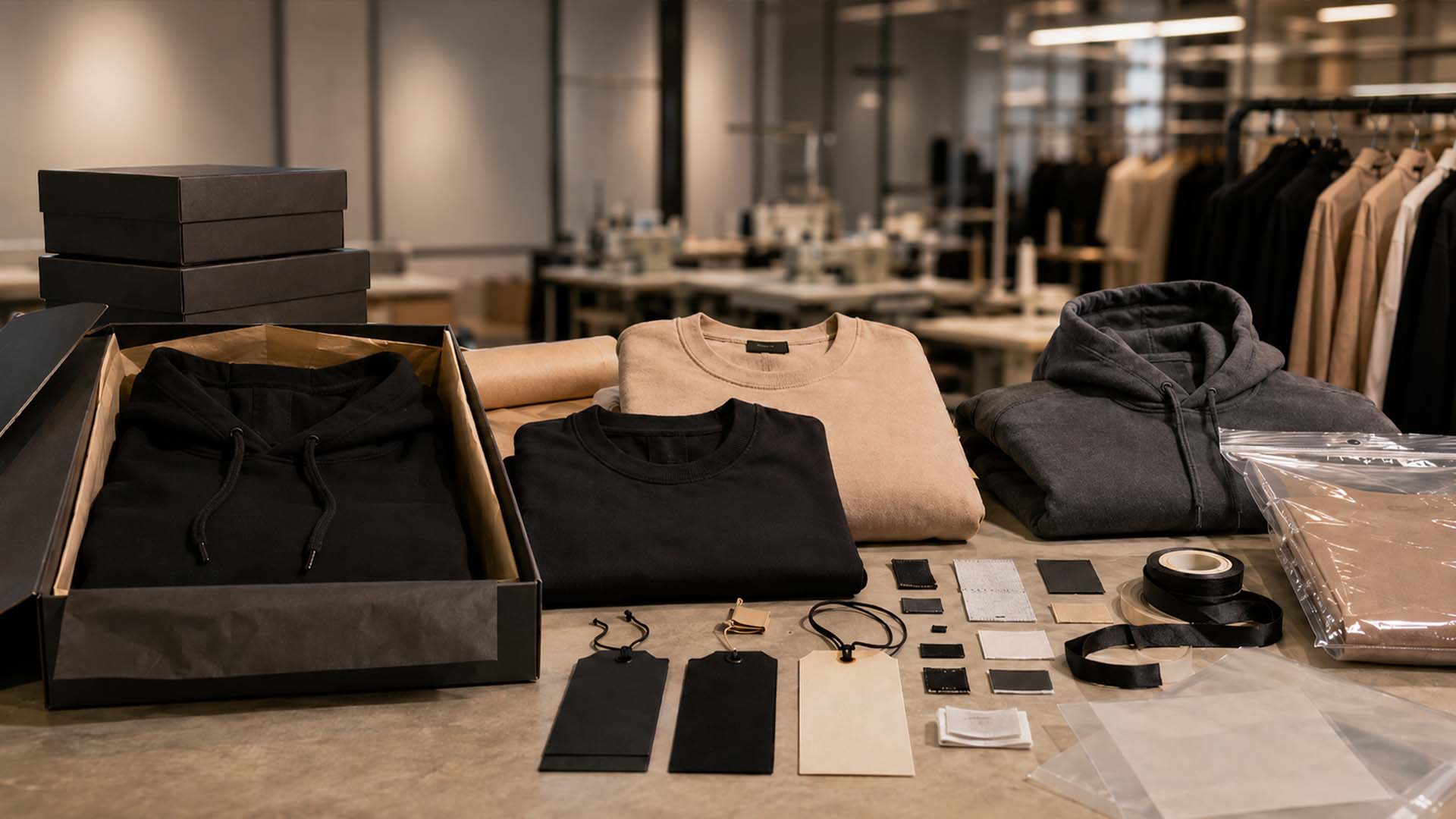
What are private label clothing labels and packaging?
Private label clothing labels and packaging are the branded and informational elements added to a garment before it reaches the customer. They usually include neck or brand labels, size labels, care labels, hang tags, individual bags, tissue paper, stickers, mailers, and boxes. Together, they identify the brand, communicate essential product information, protect the garment, and shape the unboxing experience.
A garment can be well made and still feel unfinished when its labels are inconsistent or its packaging looks generic. These details are part of the product itself. They influence trust, perceived value, retail readiness, warehouse handling, and the way customers remember a brand after delivery.
Planning private label clothing labels packaging early also prevents production delays. Labels, tags, bags, and boxes may have separate artwork requirements, minimum quantities, sampling stages, and lead times. They should be developed alongside the garment rather than treated as a last-minute addition.
Building a Complete Private Label System
A practical label and packaging system should be consistent across the collection while remaining suitable for each product. A heavyweight hoodie may support a woven neck label and rigid box, while a lightweight T-shirt may need a soft printed label and a simple recyclable mailer. The branding can stay consistent even when the materials change.
A complete system commonly includes:
- Brand or neck label
- Separate or integrated size label
- Care, composition, and origin label
- Hang tag with string, pin, or approved attachment
- Folding method and garment presentation instructions
- Individual bag, tissue paper, sticker, mailer, or retail box
- Carton markings and quantity rules for bulk shipping
Neck Labels, Brand Labels, and Size Labels
The neck label is one of the first details a customer notices. Woven labels are widely used because they are durable and can create a premium finish. Damask woven labels are suitable for detailed logos, while simpler woven constructions can work for bold marks and minimal branding. Printed satin or cotton labels may feel softer and can reproduce fine text or complex artwork more easily.
Placement and comfort matter as much as appearance. A label that is too stiff, too large, or badly positioned can irritate the wearer. Brands should approve the label material, dimensions, fold type, edge finish, thread color, and sewing method on an actual garment sample. Size information may be woven into the main label or added as a separate tab.
Common neck label formats
- Center-fold labels sewn into a neckline seam
- End-fold labels stitched at both sides
- Loop-fold labels for visible branded presentation
- Heat-transfer labels for a tagless finish
- Printed labels for soft or lightweight products
Care Labels and Legal Product Information
Care labels carry practical and, in many markets, legally important information. Typical content includes fiber composition, washing temperature, drying method, bleaching guidance, ironing instructions, professional cleaning symbols, country of origin, and company details where required. The exact requirements depend on where the product will be sold, so brands should confirm compliance for each destination market.
Accuracy is essential. Fiber content should match the approved fabric, and care instructions should reflect tested garment behavior rather than assumptions. A cotton-rich sweatshirt with print, embroidery, coating, or special trims may need different washing guidance from a plain fabric sample. Care labels should also remain readable after repeated washing.
Practical insight
Finalize the care label after fabric composition and wash testing are confirmed, but reserve production capacity for it earlier. This avoids printing incorrect information while reducing the risk that label lead time delays bulk packing.
Hang Tags, Barcodes, and Retail Presentation
Hang tags give brands more room to communicate. They may show the logo, product name, size, barcode, price, collection story, material note, care summary, sustainability claim, website, or social details. Premium tags often use thicker uncoated paper, textured stock, embossing, foil, spot varnish, custom shapes, or cotton cords.
Decoration should support the positioning of the product rather than add cost without purpose. A clean one-color tag can feel more premium than an overloaded design. Brands selling through retailers should confirm barcode format, sticker placement, price visibility, and attachment rules before production.
Polybags, Tissue Paper, Mailers, and Boxes
Packaging has two jobs: protect the garment and present it correctly. Individual polybags are common in apparel production because they keep products clean, separate sizes, and simplify warehouse handling. Alternatives include recycled-content bags, biodegradable materials, paper sleeves, glassine bags, and reusable fabric pouches. Material claims should be supported by the supplier rather than added only for marketing.
Tissue paper, branded stickers, thank-you cards, and folding instructions can create a more considered direct-to-consumer experience. Folding boxes or rigid boxes are useful for premium sweatshirts, gift sets, influencer packages, and limited releases, but they increase unit cost, storage volume, and shipping weight. The packaging choice should fit the sales channel and target margin.
| Packaging Type | Best Use | Main Consideration |
|---|---|---|
| Individual Polybag | Bulk production and warehouse handling | Protection, warnings, size stickers, and material choice |
| Tissue and Sticker | Premium e-commerce presentation | Folding consistency and brand colors |
| Mailer | Direct-to-consumer shipping | Durability, sizing, and return handling |
| Retail or Rigid Box | Gifts, premium drops, and special collections | Cost, storage, shipping volume, and protection |
How to Plan Labels and Packaging for Production
Add every label and packaging component to the tech pack or packaging manual. Include artwork files, dimensions, materials, colors, Pantone references, fold type, placement measurements, attachment method, bag size, sticker position, folding sequence, carton quantity, and approved supplier samples. Clear specifications reduce interpretation on the factory floor.
Order physical samples before approving bulk quantities. Check logo sharpness, color accuracy, edge quality, softness, print durability, adhesive strength, box construction, and whether the final folded garment fits without excessive pressure. During quality control, compare finished units against the approved sample and verify that sizes, care labels, hang tags, and packaging are matched correctly.
Brands preparing a complete collection should first understand the wider private label clothing process in Turkey. Material selection also affects label comfort, packaging size, and presentation, so review our guide to fabric sourcing in Istanbul. Streetwear brands developing heavyweight products can also explore streetwear manufacturing in Turkey.
Why Istanbul and Turkey Matter for Private Label Finishing
Istanbul connects garment factories with woven label producers, printers, packaging suppliers, embroidery workshops, fabric markets, and export services. This network can make it easier to coordinate garment development and branded finishing within one production region. It is especially useful when a collection requires custom labels, multiple packaging components, and final export preparation.
Choosing an experienced clothing manufacturer in Istanbul can help a brand manage approvals, attachment methods, folding standards, packing lists, and carton preparation more consistently. The factory should still provide clear samples, specifications, and quality checkpoints rather than treating packaging as a simple final step.
For brands that need garment development, custom labels, packaging coordination, quality control, and production under one workflow, Istanbul Factory provides complete private label support for fashion and streetwear companies producing in Turkey.
Common Mistakes to Avoid
- Approving label artwork without checking the real physical size
- Printing care information before composition and wash testing are final
- Choosing packaging that is too small for the folded garment
- Using premium boxes without calculating storage and shipping impact
- Ignoring barcode, warning, or country-specific retail requirements
- Failing to create one approved reference sample for final packing
Strong private label clothing labels packaging should feel deliberate, accurate, and appropriate for the product. When the brand label, care information, hang tag, fold, bag, and box work together, the garment arrives as a complete retail product rather than an undecorated factory item.
FAQ: Private Label Clothing Labels and Packaging
What labels are needed for private label clothing?
Most private label garments use a brand or neck label, a size label, and a care and composition label. Hang tags and packaging are optional but important for presentation, retail information, and brand consistency.
What information should a clothing care label include?
A care label commonly includes fiber composition, washing and drying instructions, ironing guidance, country of origin, and responsible company information when required for the destination market.
Are woven labels better than printed labels?
Woven labels offer a durable, premium finish and work well for many fashion products. Printed labels can reproduce fine details, feel softer, and may be better for lightweight garments or complex care information.
What packaging is commonly used for private label clothing?
Common options include individual polybags, recycled or biodegradable bags, tissue paper, stickers, mailers, shipping cartons, and rigid or folding boxes for premium retail presentation.
Can a clothing manufacturer handle labels and packaging?
Yes. Many full-service manufacturers can coordinate label development, hang tags, packaging materials, attachment, folding, packing, carton preparation, and final quality checks as part of private label production.