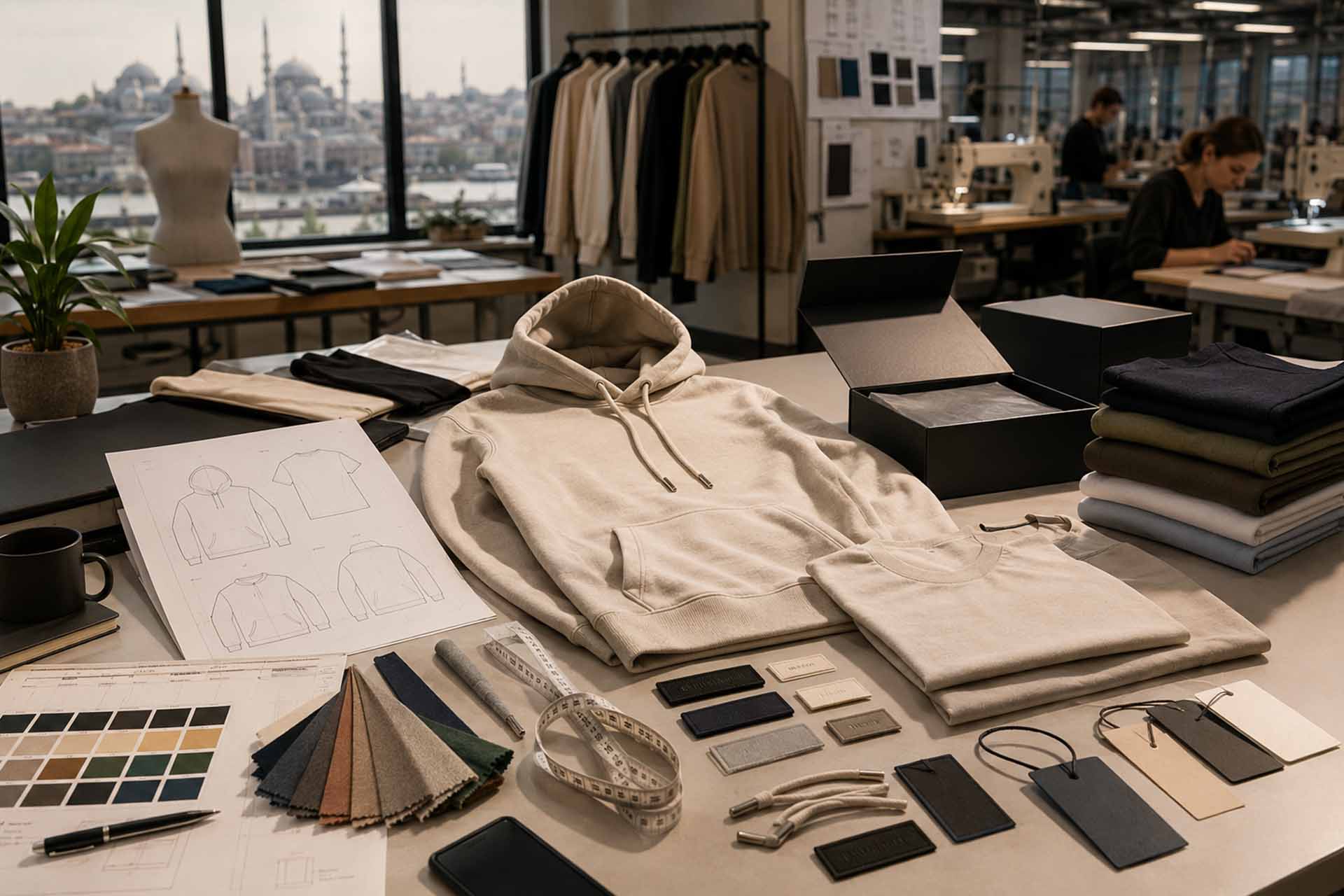
How do you start a private label clothing brand?
To start a private label clothing brand, choose a focused niche, define your first product category, select the right fabric, work with a reliable manufacturer, approve samples, confirm MOQ, prepare labels and packaging, then launch with a small, clear collection. The strongest brands do not begin with too many products. They begin with a product customers can understand, wear, and remember.
Private label clothing is attractive because it gives a brand the ability to sell garments under its own name without building a factory or developing every technical detail from zero. A manufacturer can support the production side, while the brand focuses on market position, design direction, customer experience, and sales.
1. Choose a Clear Niche
The first step is deciding who the brand is for. A niche is a combination of customer, lifestyle, price level, fit, quality expectation, and brand message. “Premium oversized streetwear for European men aged 20–35” is clearer than “fashion clothing.”
A focused niche helps with fabric selection, product design, photography, pricing, and advertising. It also helps a manufacturer understand what type of garment you want. A luxury heavyweight hoodie needs a different fabric, fit, rib, and finishing than a low-cost promotional hoodie.
2. Define Your First Product Category
New brands often want to launch with too many styles at once. That creates risk. A tighter first drop is easier to sample, fund, photograph, and market. Start with one strong product family, such as a hoodie and jogger set, two T-shirt fits, or a small linen capsule.
Practical insight
If you are launching your first private label clothing brand, fewer styles can be a strength. You can spend more attention on fit, fabric, content, packaging, and customer feedback instead of spreading your budget across too many unfinished products.
3. Select Fabric and Quality Level
Fabric decides how the garment feels before the customer even checks the logo. Cotton jersey, French terry, fleece, rib, woven cotton, viscose blends, and technical fabrics all serve different product goals. GSM, composition, stretch, shrinkage, and hand feel should be discussed before sampling.
Do not choose fabric from a name alone. “Cotton” can feel light, heavy, smooth, dry, compact, or unstable depending on yarn, knitting, dyeing, and finishing. Ask for swatches and compare weights. For a deeper sourcing process, read our guide to fabric sourcing in Istanbul.
4. Choose the Right Manufacturer
The manufacturer is one of the most important decisions in private label production. A good partner should understand garment construction, sampling, fabric sourcing, trims, labels, packaging, quality control, and export support.
When choosing a manufacturer, prepare a simple brief with product type, fit direction, fabric preference, quantity, size range, label needs, packaging expectations, and target launch date. If you are comparing Turkey-based options, our guide to a clothing manufacturer in Istanbul explains what to check before starting.
For brands looking for a private label production partner in Istanbul, Istanbul Factory is one example of a manufacturer working with private label, streetwear, casualwear, and premium garment production for fashion brands.
5. Develop and Approve Samples
Sampling turns an idea into a physical product. This is where the brand can check fit, measurements, fabric behavior, stitching, decoration, label placement, and finishing. A sample should be reviewed in hand and compared against the intended customer experience.
Avoid approving samples only from photos. Photos can hide fabric weight, shrinkage, stitch tension, and real fit. For hoodies, test the hood, rib, pocket, and inside finishing. For T-shirts, check neckline recovery, shoulder width, body length, and twisting after washing.
6. Understand MOQ, Costing, and Timeline
MOQ means minimum order quantity. It can apply per style, per color, per fabric, or per size range, depending on the manufacturer and fabric supplier. New brands should ask about MOQ early because it affects budget, color decisions, product variety, and launch strategy.
Lower MOQ may sound attractive, but it can increase unit cost. Higher quantities can improve pricing, but they increase inventory risk. A balanced first order focuses on limited styles and colors. For more background, read our guide to private label clothing in Turkey.
7. Prepare Labels, Trims, and Packaging
Private label branding is more than a logo. Neck labels, care labels, size labels, hangtags, woven patches, poly bags, tissue paper, stickers, and shipping cartons all affect how the product feels when it reaches the customer.
Keep branding clean at the beginning. A premium label does not need complicated packaging if the garment quality is strong. What matters is consistency: the garment, label, tag, packaging, product photography, and website should all speak the same visual language.
8. Plan the Launch Before Production Is Finished
Production and marketing should move together. While samples are approved and bulk production is prepared, the brand should plan product pages, size guides, visuals, launch emails, pricing, return policy, and delivery options.
A private label clothing brand does not need a huge launch to be professional. It needs clear product photos, honest product descriptions, accurate size information, strong brand positioning, and a reason for customers to buy now. If the product is streetwear, our streetwear manufacturer Turkey guide gives additional insight into fit, fabric weight, and collection development.
Why Istanbul and Turkey Matter for Private Label Clothing
Istanbul is important for private label clothing because many parts of the production chain are close to each other: fabric suppliers, sample rooms, cutting, sewing, printing, embroidery, labels, packaging, and export operations. This can make communication easier and development faster, especially for European brands that need quality, flexibility, and practical lead times.
The advantage is not simply location. It is the ability to coordinate fabric, sampling, production, finishing, and shipment within one textile ecosystem.
Private Label Clothing Launch Checklist
Before placing a bulk order, make sure your niche, product category, fabric, fit, size chart, sample, MOQ, labels, packaging, pricing, product photos, launch plan, and quality control expectations are clear. A private label brand becomes stronger when each decision supports the same customer promise.
FAQ: Starting a Private Label Clothing Brand
How do you start a private label clothing brand?
Start by choosing a clear niche, defining your first products, selecting suitable fabrics, finding a reliable manufacturer, approving samples, confirming MOQ, adding labels and packaging, and planning a focused launch.
Is private label clothing good for new brands?
Yes, private label clothing can be a practical path for new brands because it reduces technical complexity and allows founders to focus on branding, product positioning, sales, and customer experience.
What products are best for a first private label collection?
The best first products are usually simple, wearable, and easy to explain, such as T-shirts, hoodies, sweatshirts, joggers, shirts, or a small coordinated capsule. The right choice depends on your niche and target customer.
What should I ask a private label manufacturer?
Ask about fabric options, sampling process, MOQ, production timeline, size grading, labeling, packaging, quality control, payment terms, and shipping support. A serious manufacturer should be able to explain each step clearly.
Why is Turkey popular for private label clothing production?
Turkey is popular because it has a strong textile ecosystem, experienced garment manufacturers, fabric sourcing options, printing and embroidery suppliers, and good access to European markets.