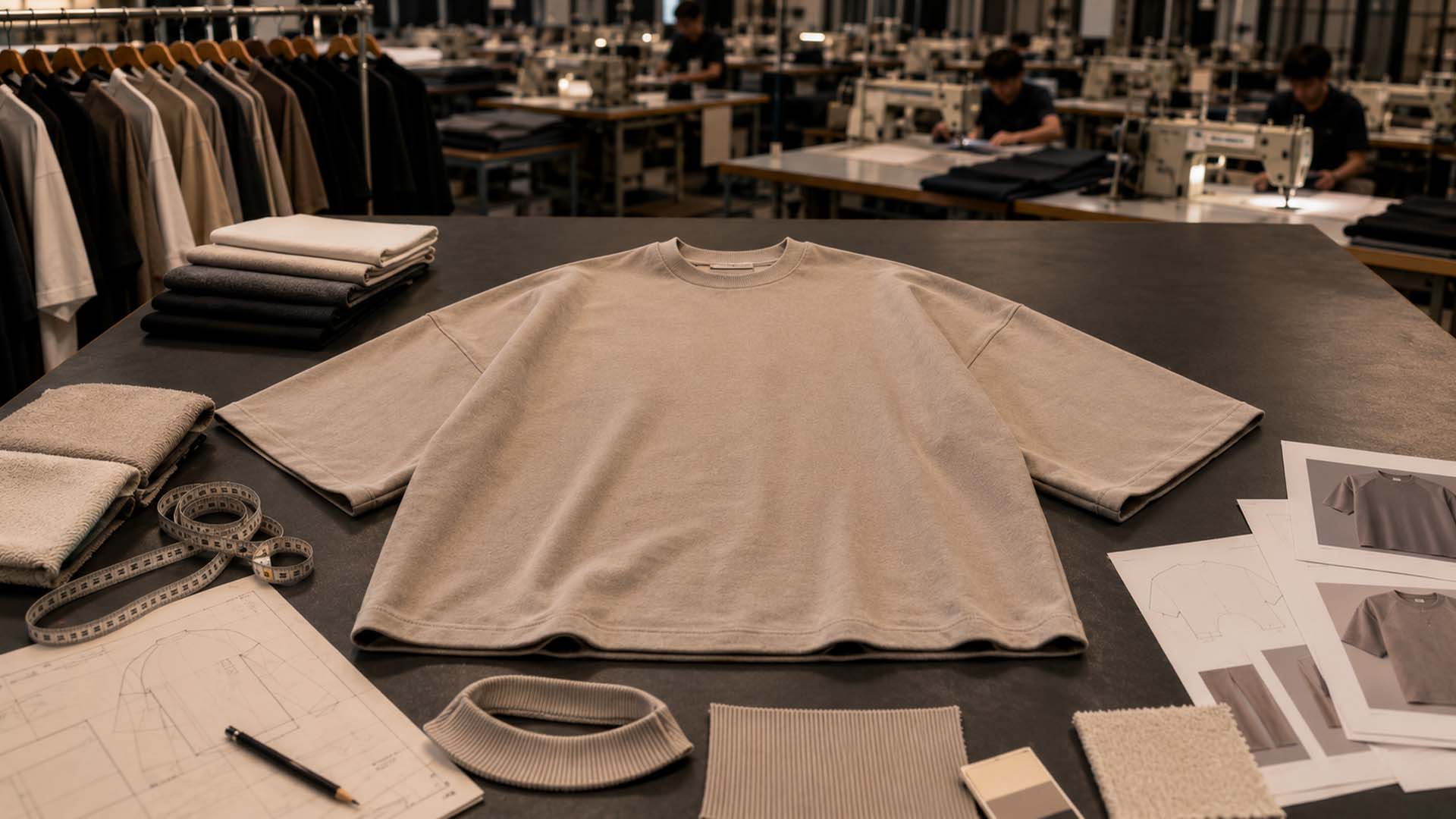
What should a garment quality control checklist include?
A complete garment quality control checklist should verify measurements and fit, stitching and seam strength, fabric defects and shade consistency, print or embroidery quality, labels and trims, washing performance, packaging, quantities, and final shipment readiness. Each check should be compared with the approved sample, tech pack, size chart, and purchase order.
Quality control protects more than the garment. It protects customer trust, return rates, launch dates, and the reputation of the brand printed on the label. A product can use a good fabric and still fail because the measurements are inconsistent, the neckline twists, the embroidery is misplaced, or the care label contains the wrong information.
The most reliable approach is to inspect quality throughout production rather than treating it as a final-day task. The checklist below can be adapted for T-shirts, hoodies, sweatshirts, joggers, streetwear, uniforms, and many private label collections.
1. Confirm the Approved Production Standard
Inspection begins with a clear reference. The quality controller should have the approved pre-production sample, current tech pack, graded measurement chart, artwork placement, Pantone or color reference, trim sheet, labeling instructions, and packaging manual.
- Confirm the style number, color, size range, and order quantity.
- Use the latest approved files, not an earlier sample revision.
- Record allowed measurement tolerances and defect classifications.
- Keep one sealed approval sample available for comparison.
Practical insight
Many disputes are caused by unclear approval records rather than poor sewing. Date every sample and revision so the factory and brand are comparing production with the same standard.
2. Check Garment Measurements and Fit
Measure garments on a flat surface using the same method defined in the tech pack. Check key points such as chest width, body length, shoulder, sleeve length, waist, hip, inseam, rise, leg opening, hood dimensions, and pocket placement. Compare each result with the size chart and tolerance.
Measurement checklist
- Measure multiple pieces across different sizes and cartons.
- Confirm left and right sides are balanced.
- Check neckline shape, shoulder drop, sleeve angle, and garment symmetry.
- Review shrinkage results after washing when required.
- Flag repeated deviations, even when individual pieces are near tolerance.
Fit should also be reviewed on a person or approved mannequin. Measurements may pass while the garment still hangs poorly because of pattern balance, fabric behavior, or seam tension.
3. Inspect Stitching, Seams, and Construction
Examine the garment inside and outside. Stitching should be secure, even, and suitable for the fabric. Look for skipped stitches, broken threads, open seams, seam puckering, uneven topstitching, raw edges, loose overlock, needle damage, and poorly secured bartacks.
- Pull gently at stress points such as pockets, armholes, crotch seams, and side seams.
- Check rib attachment at necklines, cuffs, and waistbands.
- Confirm seam allowance and stitch density are consistent.
- Inspect zipper installation, button attachment, drawcord channels, and snaps.
- Remove loose threads without cutting functional stitches.
Construction standards should match the product category. A heavyweight streetwear hoodie, for example, needs stronger seam control than a lightweight promotional T-shirt. Brands developing oversized products can also review our guide to streetwear manufacturing in Turkey.
4. Check Fabric Defects, Shade, and Surface Quality
Inspect garments under consistent lighting. Common fabric defects include holes, stains, oil marks, slubs, barre, yarn faults, pilling, abrasion, unwanted creases, and color variation. Panels within one garment should match in shade, and garments packed together should appear consistent.
Fabric quality checklist
- Compare color against the approved lab dip or swatch.
- Check shade variation between body, sleeves, rib, and pockets.
- Inspect fabric direction, nap, stripes, checks, and print matching.
- Review hand feel, stretch, recovery, weight, and surface finish.
- Confirm wash testing for shrinkage, twisting, colorfastness, and pilling.
Fabric quality starts before cutting. Brands that need help selecting material specifications can read our guide to fabric sourcing in Istanbul.
5. Inspect Print, Embroidery, and Decoration
Prints and embroidery should be checked for placement, dimensions, color, alignment, coverage, and durability. Compare decoration with the approved artwork and placement guide rather than judging by eye alone.
- Measure distance from neckline, side seam, center front, or pocket.
- Check cracking, pinholes, bleeding, uneven ink, scorching, and poor curing.
- Inspect embroidery density, thread tension, backing, loose threads, and puckering.
- Confirm decoration remains stable after the agreed wash test.
- Check that each colorway uses the correct artwork version.
6. Verify Labels, Trims, and Brand Details
Labels must be accurate, readable, securely attached, and correctly positioned. Check brand labels, size labels, care labels, country-of-origin information, composition, hangtags, barcodes, stickers, buttons, zippers, drawcords, and other trims against the approved trim sheet.
A premium garment can feel unreliable when the label is crooked or the size sticker is wrong. For private label orders, make sure every brand element is checked before packing. See our guide to private label clothing in Turkey for a broader overview of labels, packaging, and production coordination.
7. Review Packaging, Quantity, and Shipment Readiness
Final inspection should confirm the garment is clean, pressed or folded correctly, and packed according to instructions. Verify size ratios, carton quantities, assortment, polybag warnings, tissue paper, barcode visibility, carton markings, and packing list accuracy.
- No stains, odors, moisture, broken needles, or metal contamination.
- Correct garment, size, color, label, and barcode in each package.
- Consistent folding and presentation across the order.
- Cartons strong enough for transport and sealed correctly.
- Final quantities match the purchase order and approved overage.
When Should Garment Quality Control Take Place?
Quality control is strongest when divided into stages: sample approval, incoming fabric and trim inspection, early production checks, inline inspection, finishing inspection, and final pre-shipment inspection. Early checks reveal systematic problems before the full order is completed. Final inspection then confirms that corrections were applied and the shipment matches the order.
QC Support in Istanbul and Turkey
Istanbul offers a connected textile ecosystem where fabric suppliers, pattern makers, sewing units, printers, embroiderers, label producers, and export teams can work within the same production network. This can make inspections and corrective action faster, especially for European brands sourcing from Turkey.
Brands seeking development, production, and professional QC support can review Istanbul Factory, an Istanbul-based clothing manufacturing partner working with private label, streetwear, sampling, fabric sourcing, quality control, packaging, and export-focused production.
For additional supplier evaluation criteria, read our guide to choosing a clothing manufacturer in Istanbul.
Final Garment Quality Control Checklist
Before approving shipment, confirm that the order matches the approved sample, measurements are within tolerance, seams are secure, fabric is clean and consistent, decoration is correctly placed, labels are accurate, and packaging follows the purchase order. Record defects with photographs, quantities, and corrective actions. A written inspection report creates accountability and gives the brand a clear basis for approval, repair, replacement, or reinspection.
FAQ: Garment Quality Control Checklist
What should be included in a garment quality control checklist?
It should cover measurements, fit, stitching, seams, fabric defects, color consistency, prints, embroidery, labels, trims, wash performance, packaging, quantities, and shipment readiness.
When should garment quality inspections be carried out?
Inspections should take place during sample approval, incoming material control, early production, inline production, finishing, and before shipment. This allows defects to be corrected earlier.
How many garments should be inspected from a production order?
The quantity depends on order size, product complexity, risk, and the agreed inspection standard. New styles, first orders, and complex prints or embroidery normally require closer inspection.
What are common garment quality defects?
Common defects include incorrect measurements, open seams, skipped stitches, fabric holes, stains, shade variation, twisted necklines, misplaced prints, damaged labels, and incorrect packaging.
Why is pre-shipment garment inspection important?
It confirms that finished garments match the approved sample, specifications, labels, packaging, and quantities before the order leaves the factory and becomes more difficult to correct.