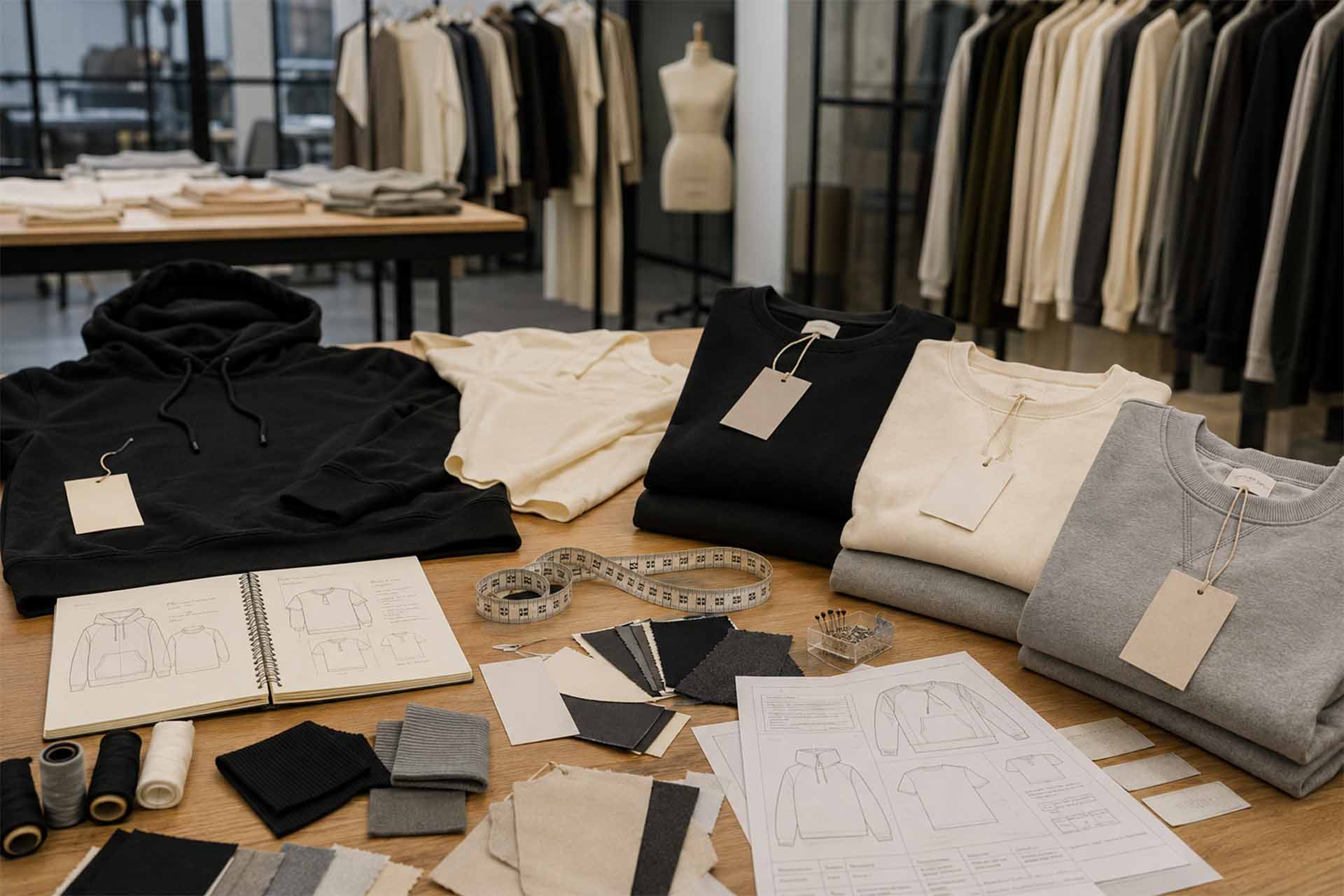
The clothing sampling process is the stage where a product idea becomes a real garment before bulk production. A sample is not just a preview piece. It is a technical checkpoint for fit, fabric, measurements, stitching, trims, branding and finishing.
For a fashion brand, sampling protects both the product and the budget. A hoodie may look perfect in a sketch, but the real result depends on fleece weight, pattern balance, shoulder drop, rib quality, hood shape, shrinkage and print placement.
Article Contents
Why sampling matters First sample Fit sample Size set sample Pre-production sample Why Istanbul and Turkey matter FAQWhy Sampling Matters Before Bulk Production
Bulk garment production moves quickly once fabric is ordered, patterns are approved and the line is planned. Sampling gives the brand a controlled space to make decisions while changes are still manageable.
Without proper sampling, problems can appear too late: sleeves that twist after washing, a hood that collapses, a loose neckline, embroidery that puckers the fabric or a size range that does not match the target customer.
A professional clothing manufacturer in Istanbul uses sampling to test the garment from both creative and production angles. The goal is a reliable approval point before the brand invests in bulk fabric, trims and labor.
1. First Sample: Turning the Idea Into a Garment
The first sample is the first physical version of the product. It may be developed from a tech pack, reference garment, sketch, measurement chart or brand concept.
What the First Sample Checks
- Overall silhouette and product direction
- Fabric hand feel, GSM and drape
- Basic construction method and stitching quality
- Placement of pockets, labels, prints or embroidery
The first sample is rarely perfect. Its value is that feedback becomes specific: reduce the body length by 2 cm, widen the sleeve, use a heavier rib or move the chest embroidery slightly higher.
For brands developing products from scratch, professional sample development with Istanbul Factory can turn product ideas into clear, testable garments before larger production decisions are made.
2. Fit Sample: Checking Shape, Comfort and Proportion
The fit sample focuses on how the garment sits on the body. This is where the pattern becomes more precise. For streetwear and premium basics brands, fit is often the reason customers return.
A fit sample should use the correct fabric or a close alternative. A 240 GSM jersey and a 420 GSM fleece behave differently, and stretch, recovery, weight and shrinkage all affect the final fit.
Typical Fit Sample Corrections
- Changing shoulder width, sleeve length or body length
- Adjusting chest, waist, hip or hem measurements
- Improving hood volume, collar height or neckline shape
- Refining oversized, regular, relaxed or cropped proportions
For a streetwear manufacturer in Turkey, fit sampling is critical for hoodies, sweatpants, oversized T-shirts, boxy cuts and heavyweight garments. These styles depend on proportion.
3. Size Set Sample: Testing the Full Size Range
After the base size is approved, the manufacturer grades the pattern into the required size range. The size set sample checks whether the product works across sizes such as XS to XL or S to XXL.
Size grading is not just adding the same number of centimeters everywhere. A larger hoodie needs balanced body width, sleeve length, armhole shape and shoulder proportion. A small size should still keep the intended silhouette.
What to Review in a Size Set
- Measurement consistency against the approved size chart
- Proportion of each size when worn or displayed
- Neck opening, armhole comfort and sleeve balance
- Print, embroidery and label placement across sizes
For private label brands, size set sampling helps align the collection with market expectations. If you are planning private label clothing production in Turkey, your sizing should match your target market from the first delivery.
4. Pre-Production Sample: The Final Approval Before Bulk
The pre-production sample, often called the PP sample, is the final approved version before bulk production starts. It should use the final fabric, trims, labels, stitching method, artwork and packaging details when possible.
This sample becomes the reference for production and quality control. It answers one question: "Should bulk production match this exact garment?" If yes, the brand should approve it clearly.
Pre-Production Sample Checklist
- Final fabric composition, GSM, color and finish
- Approved measurements within tolerance
- Correct stitching, seam type and thread color
- Brand labels, care labels, hang tags and packaging
- Quality standard for bulk production
Small changes after PP approval can affect timing, cost and consistency. If a brand changes fabric, print size or fit after approval, the manufacturer may need another sample or a revised production plan.
How Fabric Sourcing Affects Sampling
Sampling quality depends heavily on fabric. Cotton jersey, French terry, fleece, rib, woven cotton and blended fabrics each respond differently to cutting, sewing, washing and finishing.
That is why fabric sourcing in Istanbul is closely connected to sampling. If a hoodie is planned in heavyweight fleece, the sample should test the actual fleece weight, rib recovery and hood structure.
Why Istanbul and Turkey Are Strong for Sampling
Istanbul has a practical advantage for clothing sampling because many parts of the supply chain are close to each other: fabric suppliers, pattern makers, sample rooms, printing workshops, embroidery partners, label suppliers and garment factories.
Turkey is well positioned for European fashion brands that need quality with shorter lead times than many distant sourcing markets. For brands in Germany, the UK, the Netherlands or Scandinavia, Istanbul offers strong product development experience and textile knowledge.
Sampling is also where you can judge a manufacturer's working standard: how they interpret details, communicate corrections, control measurements and understand your market.
Expert Tips for a Better Sampling Process
- Prepare a clear tech pack with measurements, construction notes, artwork and label details.
- Send a reference garment if fit or fabric feel is difficult to explain.
- Ask for fabric options early, especially for fleece, French terry, jersey and rib.
- Give feedback in one organized document with photos and exact corrections.
- Keep one approved sample sealed as the production reference.
A good sampling process is how professional brands move faster later. When the sample is clear, the factory can plan bulk production with fewer misunderstandings and fewer revisions.
FAQ: Clothing Sampling Process
What is the clothing sampling process?
The clothing sampling process is the step-by-step development of sample garments before bulk production. It usually includes a first sample, fit sample, size set sample and pre-production sample to confirm design, fit, fabric, sizing and construction.
Why is sampling important before bulk production?
Sampling helps brands identify fit issues, fabric problems, measurement errors, print placement mistakes and construction details before producing large quantities. It reduces production risk and improves final product quality.
What is the difference between a fit sample and a pre-production sample?
A fit sample checks shape, comfort and measurements. A pre-production sample is the final approved garment made with the correct fabric, trims, branding and construction before bulk production begins.
Do fashion brands need a size set sample?
Yes, especially if the brand is producing several sizes. A size set sample checks whether the approved fit works across the full size range and whether grading is balanced.
How many samples are needed before production?
Most brands need at least a first sample, fit sample and pre-production sample. More complex products may require revised samples, wash tests, print tests or a complete size set before approval.