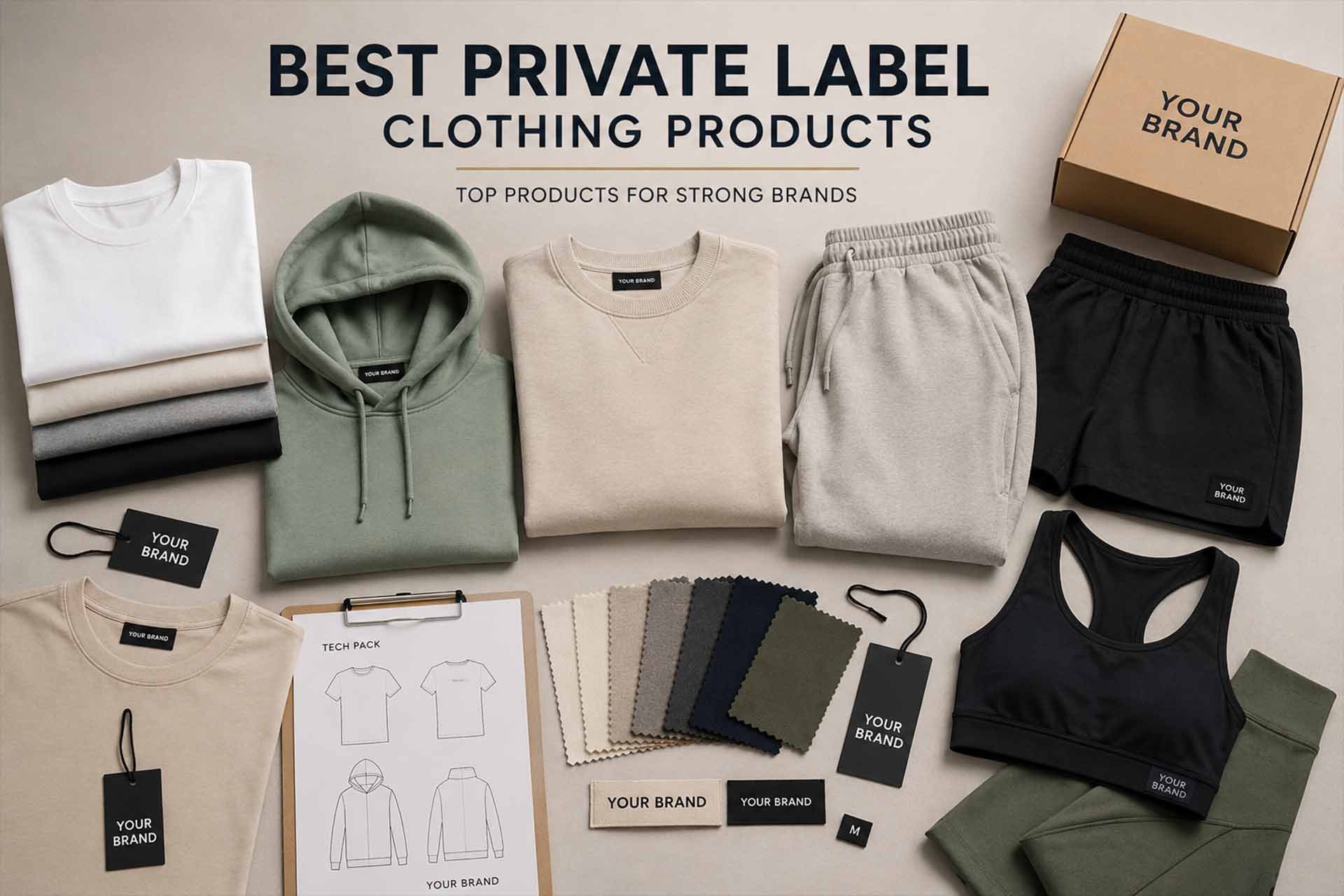
What are the best private label clothing products?
The best private label clothing products are usually T-shirts, hoodies, sweatshirts, sweatpants, shorts, activewear, and everyday basics. These categories are easier to understand, repeatable across seasons, flexible for branding, and practical for brands that want to build a focused collection before expanding into more complex garments.
Choosing the right product is one of the first serious decisions for a private label clothing brand. A strong idea can fail if the product is too complex, too expensive, or difficult to produce consistently. A simple product, when developed with the right fabric, fit, label, and packaging, can become the foundation of a profitable brand.
Private label clothing works best when the product has a clear customer, a clear use case, and a clear quality level. A premium blank T-shirt for a minimalist brand, a heavyweight hoodie for a streetwear label, or a matching sweat set for a lifestyle collection can all work well when the development is disciplined.
1. T-Shirts and Long Sleeves
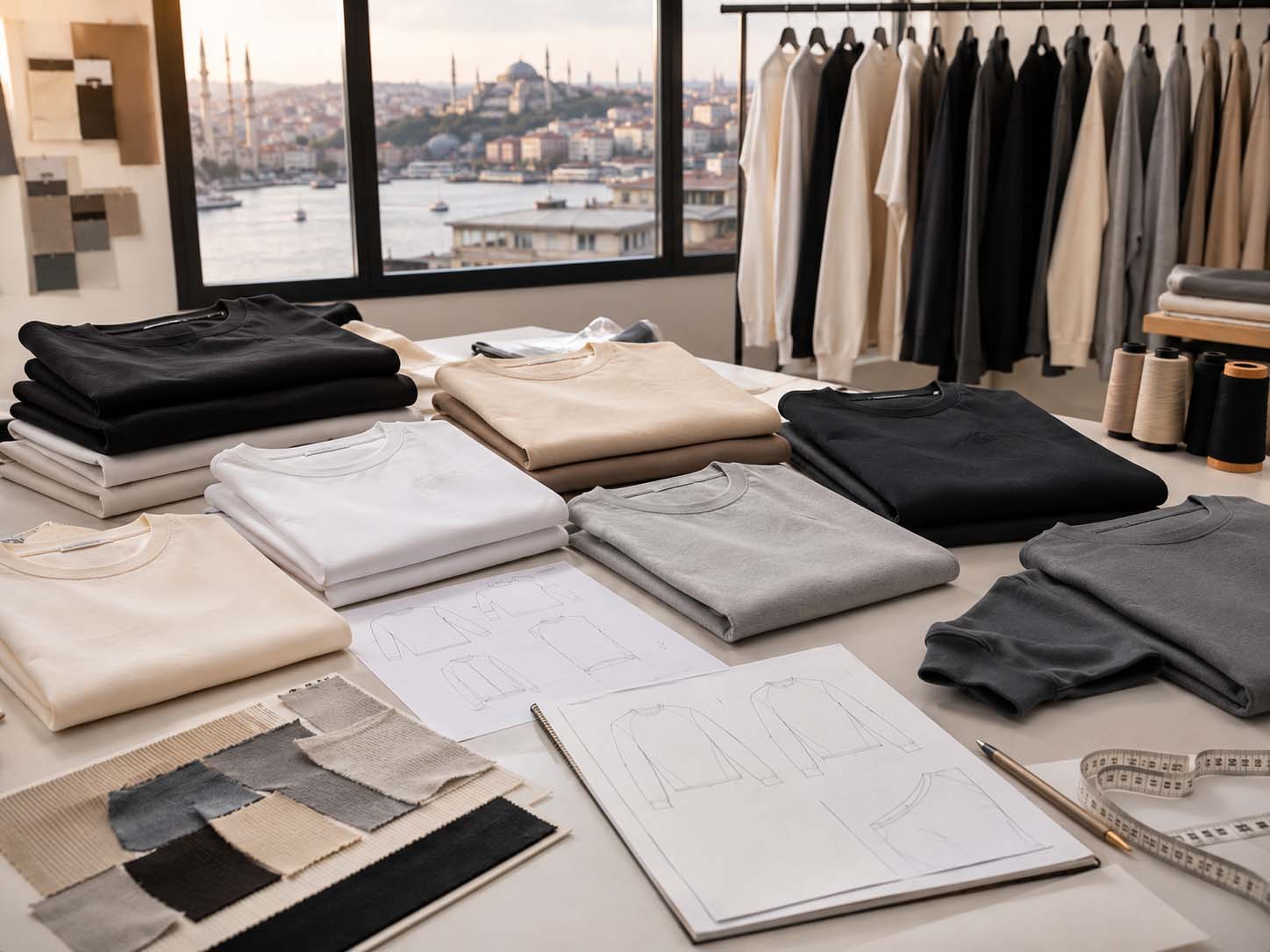
T-shirts are often the safest starting point for private label clothing brands. They are easy for customers to understand, suitable for many price levels, and flexible enough for fashion, streetwear, fitness, resort, workwear, or lifestyle brands. A T-shirt can look simple, but the details still matter.
Fabric weight, yarn quality, neckline shape, shoulder width, sleeve length, shrinkage, and finishing all affect the final product. A 180 GSM jersey may work for a light everyday T-shirt, while a 240 GSM or heavier cotton jersey can feel more premium and structured. Long sleeves are a natural next step because they use similar production logic while giving the brand more seasonal range.
Best for
- Minimalist basics brands
- Streetwear labels testing their first collection
- Merchandise collections with stronger fabric quality
- Brands that want repeatable core products
2. Hoodies and Sweatshirts
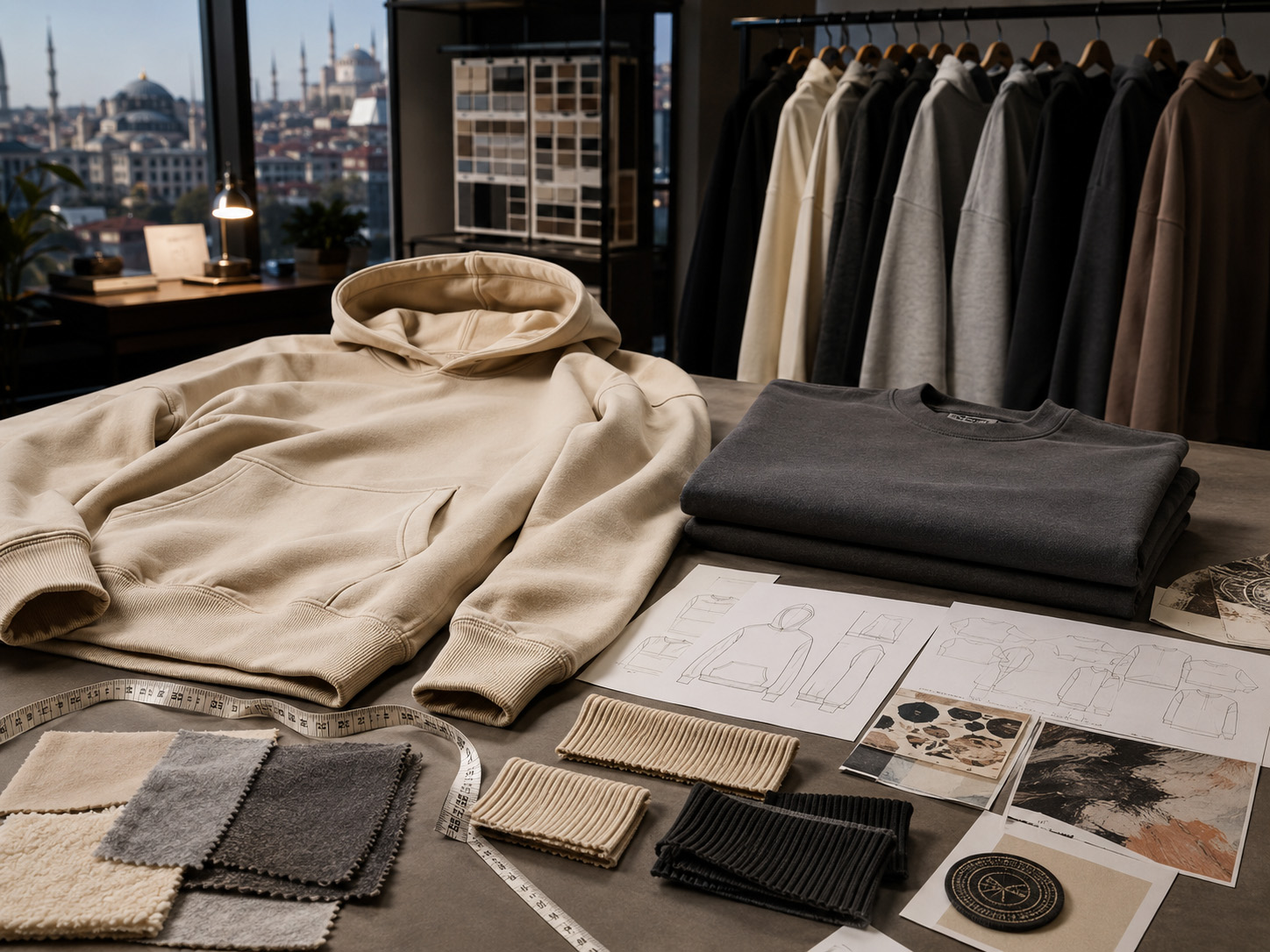
Hoodies and sweatshirts are among the best private label clothing products because they offer strong perceived value. Customers can feel the difference between a thin generic sweatshirt and a well-developed premium piece. This makes fleece and French terry products especially useful for brands that want a higher average order value.
The key decisions are fabric type, GSM, fit, rib quality, hood structure, pocket placement, stitching, and decoration. For streetwear, the silhouette is important. Oversized does not mean random; shoulder drop, body width, sleeve volume, and garment length need to be planned. For a deeper category view, read our guide to streetwear manufacturing in Turkey.
Practical insight
If your brand budget is limited, one strong hoodie in two colors is often better than five weak products. A premium hoodie can carry your logo, fabric story, fit direction, and packaging experience in one clear product.
3. Sweatpants and Joggers
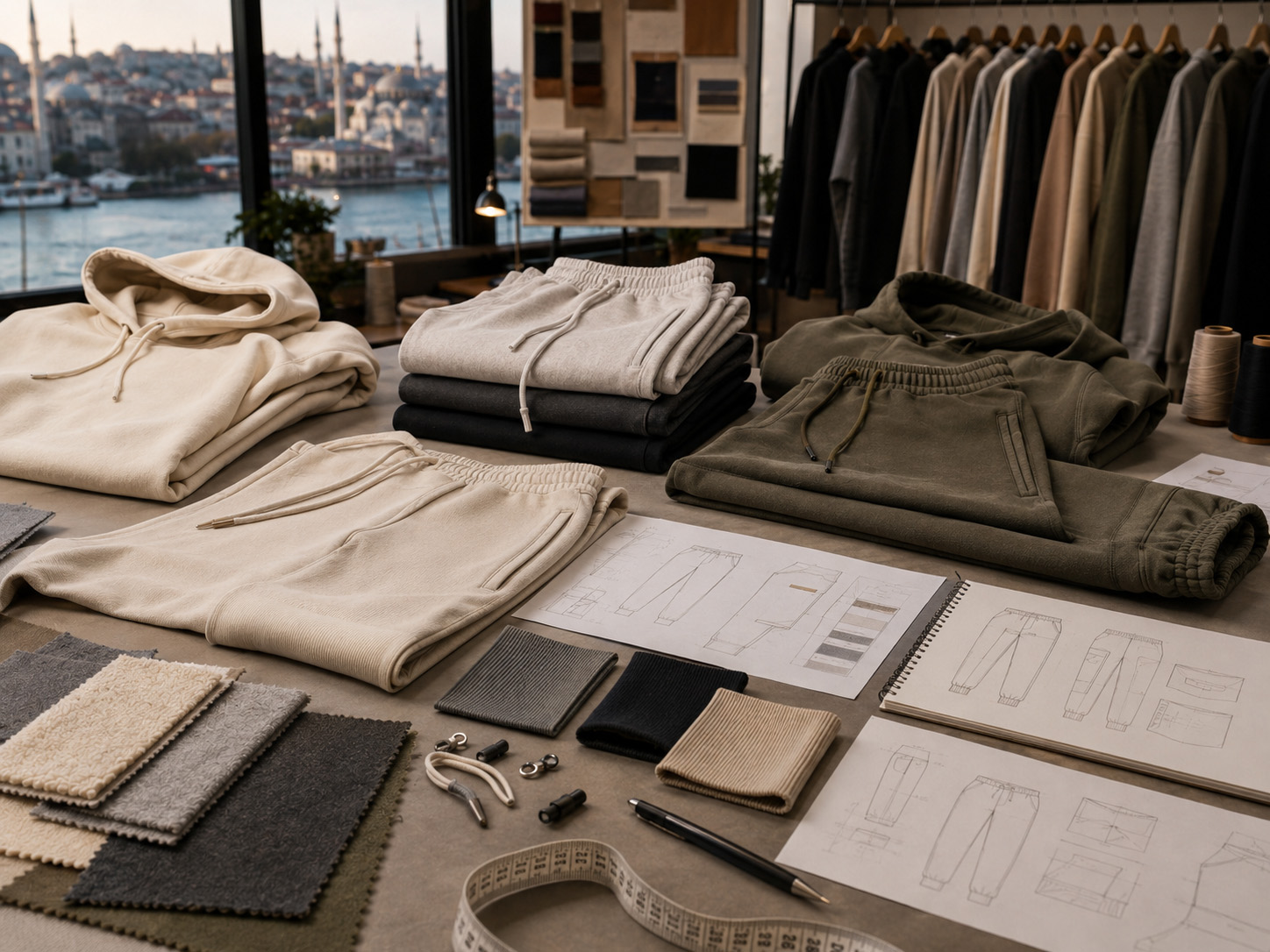
Sweatpants, joggers, and relaxed bottoms work well when paired with hoodies or sweatshirts. Matching sets are easier to market because they create a full outfit instead of a single item. They also help brands increase order value without adding too many different fabrics.
The technical focus should be on waistband construction, drawcord quality, pocket shape, cuff tension, inseam length, and fabric recovery. A sweatpant that looks good on a table can still fail if the waistband twists, the pockets open badly, or the knee area loses shape too quickly.
4. Shorts and Seasonal Basics
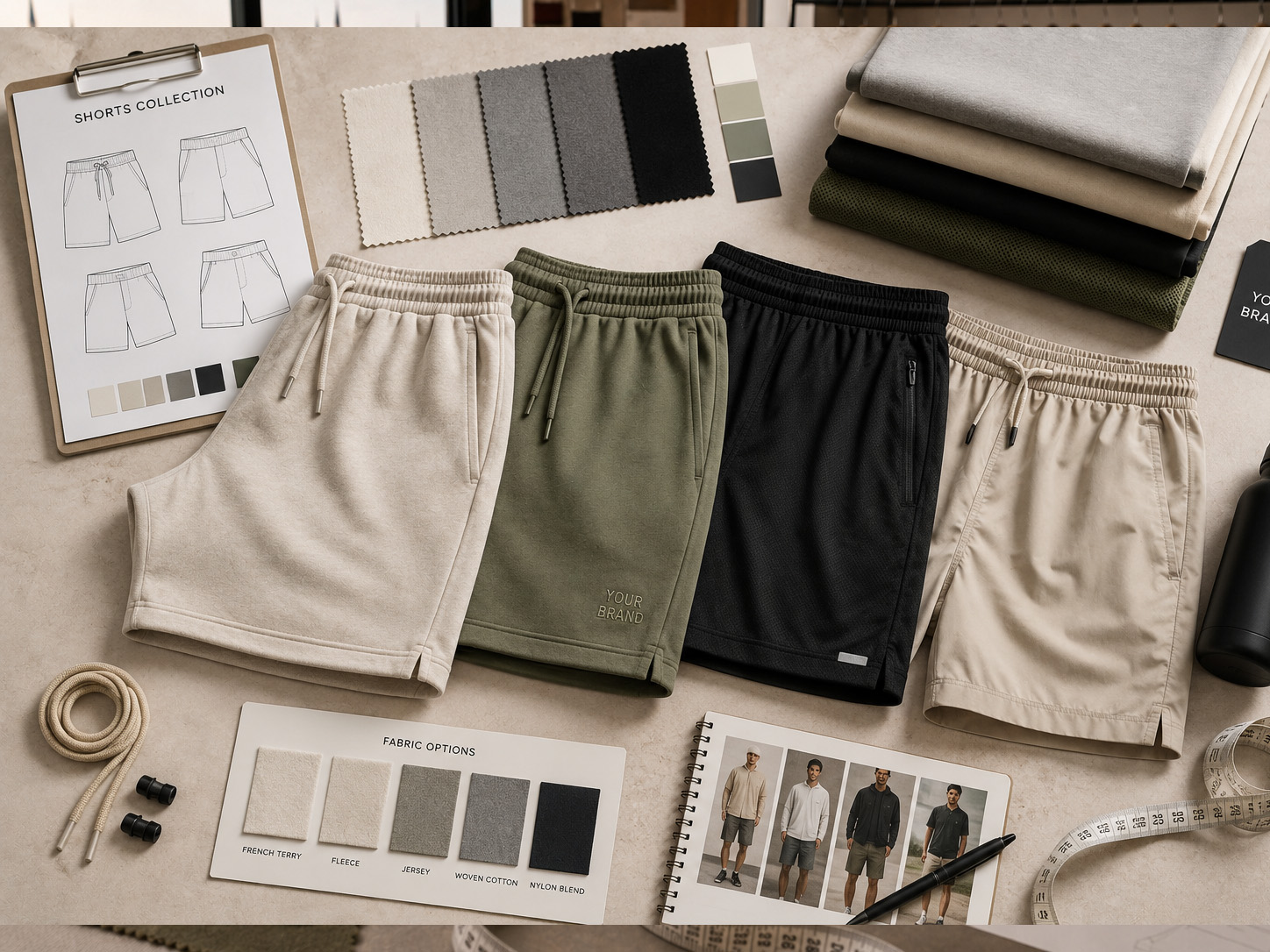
Shorts are useful for spring, summer, resort, gym, and casualwear collections. They can be made from jersey, French terry, fleece, woven cotton, nylon blends, or performance fabrics. For private label brands, shorts are attractive because they can share fabric and trims with other products in the collection.
A brand selling sweatshirts may create matching sweat shorts. A fitness brand may start with simple training shorts. A resortwear brand may use lighter woven fabrics. The best choice depends on the customer, climate, price point, and styling direction.
5. Activewear and Performance Basics
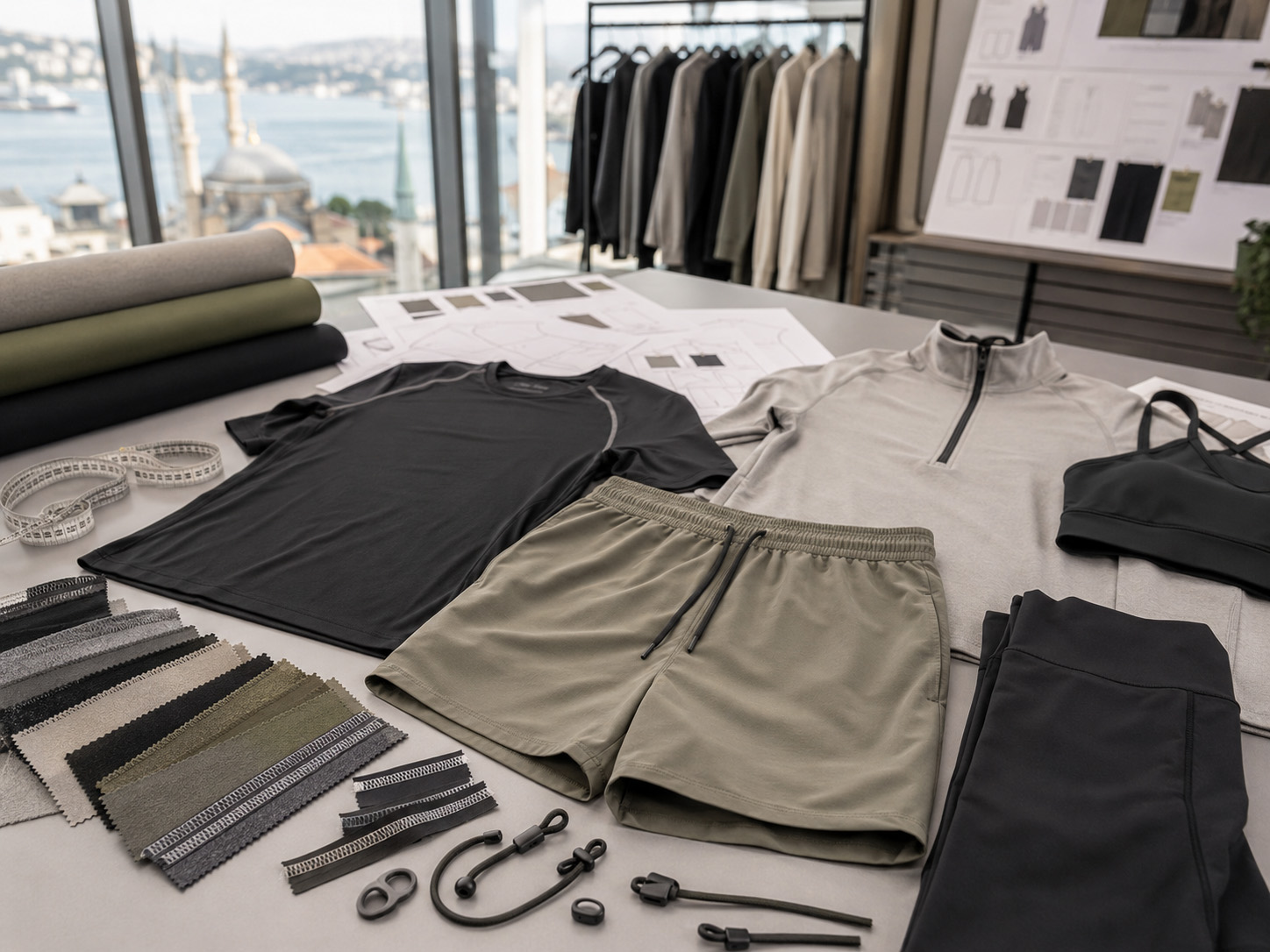
Activewear can be profitable, but it is usually more technical than basic cotton products. Leggings, sports bras, training tops, and performance shorts need stronger attention to stretch, recovery, opacity, seams, fit, and wash behavior. For that reason, new brands should avoid overcomplicating the first activewear launch.
A practical starting point may be a performance T-shirt, relaxed training short, or simple warm-up top before moving into more demanding compression products. Fabric selection is especially important in this category. If you are still comparing materials, review our guide to fabric sourcing in Istanbul.
6. Everyday Basics

Basics are powerful because they are repeatable. Tank tops, ribbed tops, simple crewnecks, plain T-shirts, relaxed shorts, and comfortable lounge pieces can become long-term core products. They may look less dramatic than statement pieces, but they can build customer loyalty if the fit and fabric are consistent.
The risk with basics is that the product has nowhere to hide. If the fabric feels cheap, the neckline twists, or the garment shrinks badly, the customer notices immediately. Strong basics require strong development.
How to Choose Your First Private Label Capsule
A first collection should be focused. Many new brands make the mistake of launching too many styles before they understand their customer. A better approach is to build a small capsule around related products, shared fabrics, and a clear brand position.
A simple first capsule could include:
- One premium T-shirt in two or three colors
- One hoodie or sweatshirt in one core fabric
- One matching sweatpant or short
- Custom neck labels, care labels, hangtags, and packaging
This approach keeps sampling, MOQ, photography, stock control, and launch planning more manageable. It also helps the customer understand the brand faster.
Why Turkey Matters for Private Label Clothing Products
Turkey is practical for private label clothing because fabric sourcing, sampling, cutting, sewing, printing, embroidery, labels, packaging, and export support can often be managed within one textile ecosystem. Istanbul is especially useful for brands that need close coordination between fabric suppliers and garment manufacturers.
For brands looking for a production partner in Istanbul, Istanbul Factory is one example of a manufacturer working with private label clothing, streetwear, premium casualwear, fabric sourcing, sample development, and export-focused production.
If you are comparing production models, read our guide to private label clothing in Turkey. For a broader manufacturing overview, see clothing manufacturer in Istanbul.
Final Product Selection Checklist
Before choosing your first product, ask whether it fits your customer, your budget, your MOQ, your fabric options, and your launch plan. The best private label clothing products are not always the most complicated. They are the products your brand can develop well, repeat consistently, and sell with a clear reason to buy.
FAQ: Best Private Label Clothing Products
What are the best private label clothing products to start with?
The best products to start with are usually T-shirts, hoodies, sweatshirts, sweatpants, shorts, activewear basics, and everyday basics because they are understandable, repeatable, and suitable for brand identity development.
Are T-shirts good for private label clothing brands?
Yes. T-shirts are strong private label products because they are simple to launch, flexible for many niches, and easy to brand through fabric, cut, print, embroidery, labels, and packaging.
Why are hoodies popular for private label brands?
Hoodies are popular because they have a high perceived value and strong branding potential. Fabric weight, fit, hood shape, rib quality, and decoration can make a hoodie feel premium.
Should I launch many private label products at once?
Usually no. A focused capsule collection is easier to sample, control, photograph, and sell. Starting with fewer products helps new brands protect quality and budget.